Have you ever stared at your phone screen, thumbs hovering over the keyboard, completely unsure of what to say? Maybe you needed to write a heartfelt birthday wish, a professional email, or a clever reply to someone special. We’ve all been there. The pressure to find the right words at the right moment can be surprisingly stressful.
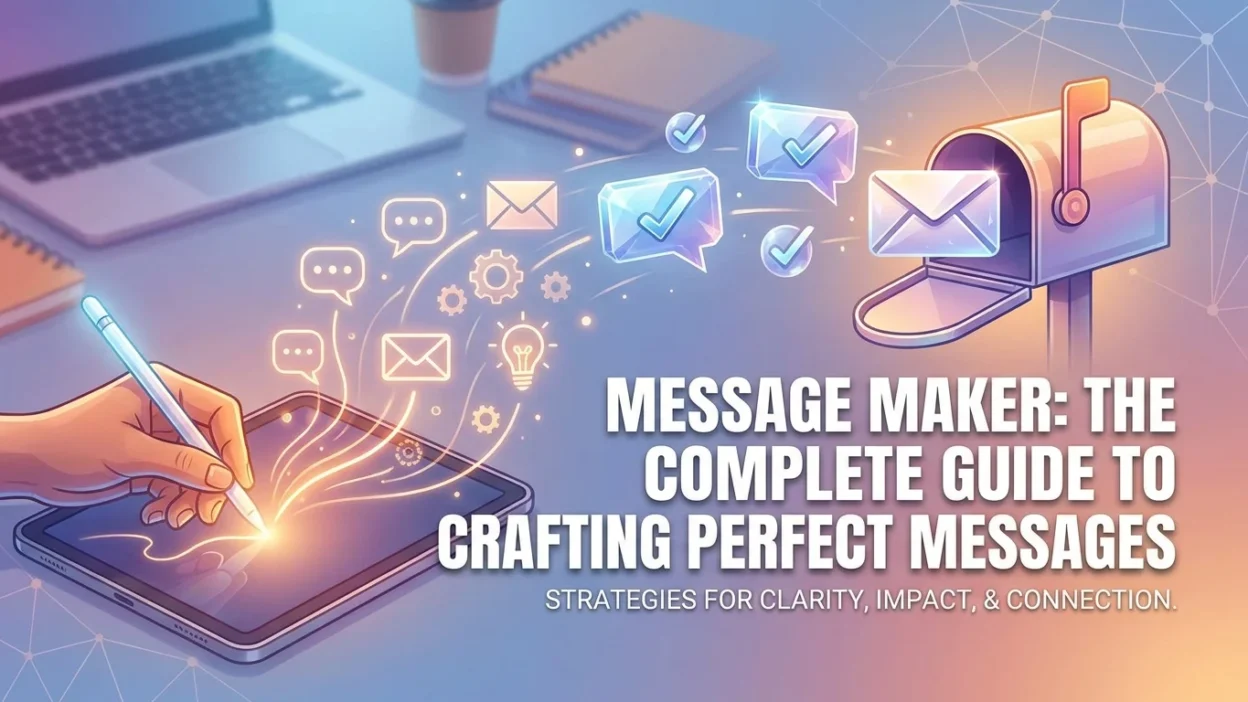
Enter the message maker. These tools—ranging from AI-powered writing assistants to creative mockup generators—are designed to help you craft, personalize, and even visualize messages for any situation. Whether you’re looking to express yourself better, save time, or create fun content, there’s a message maker tailored to your needs.
This guide explores the diverse world of message makers, breaking down the different types, their features, and how to choose the best one for your specific requirements.
What Is a Message Maker?
A message maker is a broad term for any tool that helps you create written content for communication. It can be an app, a website, or even a software program. The core purpose is to simplify the process of composing messages, ensuring they are clear, appropriate, and well-received.
Modern message makers have evolved significantly. What started as simple text editors has transformed into sophisticated platforms using artificial intelligence, augmented reality, and mockup generators. Depending on your needs, a message maker might generate text for you, help you edit it, or allow you to create realistic-looking screenshots of conversations.
Types of Message Makers
Message makers generally fall into distinct categories based on their primary function. Understanding these categories helps you identify which tool is right for you.
AI-Powered Message Generators
These are perhaps the most popular and versatile type of message maker. AI message generators use large language models to compose text based on your input. You provide a brief description of what you need, and the AI creates a draft for you.
How They Work: You typically enter a prompt, select a category (like “birthday” or “apology”), and choose a tone (such as “formal,” “casual,” or “emotional”). The AI then generates a message that matches your specifications.
Realistic Example: The AI Message Writer on Google Play is a good example. According to its description, it helps you “write smart, meaningful, and ready-to-send messages for every situation,” from thank-you notes to business replies . You can select from tones like Friendly, Emotional, or Formal to match your intent .
Another example is easyMessage.ai, an online service that “uses AI to write personal messages for everyday and sensitive moments.” It’s designed for when “wording matters and you want to say the right thing without spending a long time drafting” . You can generate text for birthdays, congratulations, condolences, love confessions, and more .
Key Features to Look For:
- Multiple message types: Covers personal, professional, romantic, and other scenarios.
- Tone selector: Allows you to adjust the formality and emotion.
- Multi-language support: Essential for reaching a diverse audience.
- Personalization: The ability to easily add names and specific details.
Message Editors and Styling Tools
Sometimes you don’t need content generation—you just need a better way to format and edit your thoughts. Message editor apps provide a clean interface for composing, editing, and enhancing your texts.
How They Work: These apps offer a user-friendly editor with features like emoji support, speech-to-text, and text-to-speech. They help you organize your messages and add visual flair.
Realistic Example: The Message Editor app (available on Google Play) is marketed as a “reliable message text editor app” with a simple, intuitive interface . Its features include composing and editing messages, emoji support, speech-to-text conversion, and easy sharing. There’s even a night mode for late-night composing .
Similarly, Fonts Message Maker is a font pack that allows you to “create an image of a message created and customized in any way you want using any of these cool fonts” . This is perfect for creating visually unique messages for social media.
Mockup and Fake Message Generators
This unique category of message maker doesn’t just help you write text; it helps you visualize it. Fake message generators create realistic-looking screenshots of conversations, which are perfect for content creation, storytelling, or design mockups.
How They Work: You input characters, messages, and timestamps, and the tool instantly formats them into a chat-style layout that looks authentic .
Realistic Example: WriteCream’s Fake Message Maker lets you “create fun, playful, and realistic-looking chat mockups for entertainment or creative projects” . It’s perfect for storytellers, content creators, and anyone who wants engaging screenshots without manual editing .
Another example is the Fake WhatsApp Chat Generator from SocialPreviewHub, which replicates the exact WhatsApp UI with green sent bubbles, white received bubbles, double blue tick read receipts, and both light and dark mode themes . This tool is widely used for social media content, marketing testimonials, and educational purposes .
Specialized Message Tools
Some message makers are built for very specific use cases, like sending messages through particular channels or creating augmented reality experiences.
WhatsApp Link Generators: Tools like WhatsLink allow you to “create personalized WhatsApp messages and generate shareable links in just a few seconds” . You enter a phone number and a message, and the tool generates a clickable link that opens WhatsApp with your pre-filled text. This is incredibly useful for businesses wanting to automate customer interactions .
AR Message Makers: One of the more unusual entries is Message Maker -ARでメッセージを伝える- (Message Maker – Convey Messages with AR). According to its description, this Android app allows you to watch printed photos come to life as videos. You select a card, choose a video, and edit a design to complete the application . It’s a novel example of how “message” can extend beyond text into interactive experiences.
How to Choose the Right Message Maker
With so many options, selecting the right tool can be overwhelming. Here’s a framework to guide your decision.
Consider Your Use Case
Your primary goal is the biggest factor. For writing support, an AI-powered generator is your best bet. For creative projects like social media skits, a mockup generator is ideal. If you want to format and style your own text, a message editor is perfect. For business communications, a specialized tool like a WhatsApp link generator might be the most efficient.
Evaluate Features
Different tools offer different capabilities. Here’s what to look for:
FeatureWhy It MattersAI Model QualityMore advanced models produce more coherent, human-like text .Tone and Style ControlAllows matching your message to the situation and audience .Language SupportImportant for multilingual communication .RealismFor mockups, the output should be indistinguishable from a real chat .PrivacyClient-side tools process data locally for better security.Export OptionsThe ability to download, share, or copy your message instantly.
Consider Technical Requirements
If you’re a developer or want to integrate a message maker into your workflow, look for:
- API Access: For building custom solutions.
- Open-Source Availability: Tools like WhatsLink are free and open-source, allowing for customization .
- Cross-Platform Support: Works on web, Android, and iOS.
Common Mistakes to Avoid
Even the best message maker won’t help if you use it incorrectly. Here are common pitfalls to watch out for.
Over-Relying on AI Without Personalization
The most common mistake is treating the generated text as a final draft. A message maker gives you a great starting point, but the best results come from personalization. Add specific details about the person you’re writing to—their name, a shared memory, or a specific reason you’re reaching out .
Using Inconsistent Tone
AI generators often default to a neutral tone. If you don’t specify a tone, you might end up with a message that feels robotic or inappropriate for the situation. Always use the tone selector to match your message to your audience. For example, you wouldn’t use a formal tone for a close friend or an overly casual tone for a business contact .
Creating Unrealistic Mockups
If you’re using a fake message maker for content, realism is everything. Avoid overly formal or grammatically perfect text, as real chats are more relaxed. Mix short replies with longer messages, use emojis sparingly, and make sure your timestamps make sense .
Ignoring Ethical Guidelines
Fake message makers are powerful, but they must be used responsibly. Never use them to impersonate real people or fabricate evidence of conversations that didn’t happen. For educational or testimonial content, clearly label your screenshots as mockups .
Frequently Asked Questions About Message Makers
What is a message maker app?
A message maker app is a tool that helps you create, edit, or generate text messages. It can use AI to write content, format your words with fonts and emojis, or even create realistic chat mockups.
Are message maker apps free to use?
Many message makers offer free versions with basic features. AI-powered tools often have limited free tiers. Mockup generators like SocialPreviewHub’s WhatsApp Chat Generator are typically free with no usage limits or watermarks .
How do I make a fake message for fun?
Use a fake message or mockup generator like WriteCream or SocialPreviewHub. Enter your characters, dialogue, and timestamps, and the tool will automatically format everything into a clean, realistic chat layout .
Can I use a message maker to send messages on WhatsApp?
Yes. Tools like WhatsLink allow you to create a custom message and generate a shareable link. When someone clicks the link, it opens WhatsApp with your pre-written message ready to send .
What is the best AI message generator?
The best one depends on your needs. For general use, apps like the AI Message Writer offer a wide range of categories and tones . For personal greetings, easyMessage.ai is highly recommended for its sensitivity to “everyday and sensitive moments” .
Can I use a message maker for professional communication?
Yes. Many AI generators support a “Formal” tone suitable for business correspondence, thank-you notes, and professional replies . For more interactive professional use, WhatsApp link generators can help with automated customer replies and promotions .
Conclusion: Finding the Right Words Has Never Been Easier
The next time you’re stuck on what to say, remember that a message maker is just a few clicks away. Whether you need an AI to draft a heart-warming note, a mockup tool to create content for your social media, or a simple editor to format your text, there’s a solution out there that fits your needs. By understanding the different types available and matching them to your use case, you can save time, reduce stress, and always send the right message.

Amelia Brooks is a passionate writer specializing in text meanings, slang, and digital communication trends. She simplifies modern messaging to help readers understand every text with ease.