Have you ever glanced at your phone and seen a text from 122, leaving you completely puzzled? Maybe you received a cryptic error message, or perhaps it seemed like a legitimate notification from an official source. Unlike common texting abbreviations that are clearly slang, “122” appears in several different contexts, and its meaning often depends entirely on where you are and what your phone is doing. This confusion can be frustrating, especially when the message appears repeatedly or contains urgent-sounding language. Some people worry it might be a scam, while others simply want the annoying notifications to stop.
This comprehensive guide will explain everything you need to know about a 122 text message. We’ll cover its various meanings, from technical errors to official service numbers, retro pager codes, and even scam alerts. You’ll also learn practical steps to troubleshoot persistent messages and protect yourself from potential fraud. By the end, you’ll know exactly how to handle any message that comes from 122.
Understanding the Many Meanings of 122 in Texting
The number 122 doesn’t have a single, universal meaning in digital communication. Its interpretation depends entirely on the context in which it appears. Generally, it falls into a few main categories: as a destination number for automated system messages, as an error indicator, as a relic of retro communication, or as the sender ID for official services.
Understanding these distinctions is crucial for figuring out why you received a message from this number. Additionally, it helps you determine the appropriate response, whether that means ignoring the message, troubleshooting your phone, or reporting a potential scam. Let’s explore each of these meanings in detail.
122 as a System Error or Delivery Failure

One of the most common reasons people receive a 122 text message is that it’s an automated error notification. This usually happens when your phone or network tries to send a message to an invalid destination. Importantly, it’s not a message from a person or service but rather a system-generated alert telling you something went wrong with your own device or network connection.
What “Error Invalid Number” Actually Means
Specifically, many users have reported receiving a text from 122 that says something like: “122 Error Invalid Number. Please re-send using a valid 10 digit mobile number or valid short code.” This is a classic system error message. It means your phone sent a message to 122 itself, and the network responded, “That’s not a valid address for a text message.”
This situation can be confusing and frustrating, but it usually points to a technical glitch rather than a security threat. The message often appears right after your phone switches from a Wi-Fi network to a cellular network like 4G LTE. This timing suggests that a background process or an app on your phone is configured to send data to a specific number. When the connection drops or changes, the app may try to send that data again, but it ends up targeting the wrong address (like 122) by mistake.
Why Your Phone Might Send Messages to 122
So, why would your phone try to send a text to 122 in the first place? This can happen due to several different reasons. Let’s examine each possibility in detail.
Incorrect APN Settings
Your phone uses Access Point Name (APN) settings to connect to your carrier’s data network. If these settings are entered incorrectly, it can cause your phone to behave strangely. For instance, one user discovered that after unlocking their phone from one carrier and switching to another, they had to reset their APN settings. The settings they found online, while functional for data, caused their phone to send out messages that were kicked back from 122 because it wasn’t a valid address. Correcting these settings often resolves the issue immediately.
A Malicious or Malfunctioning App
Sometimes, the culprit is a hidden app running in the background. Reports from users describe a persistent issue where their phone would automatically send an SMS to 122 every time it powered on. This isn’t just annoying, it can also rack up charges on your phone bill. Users were able to confirm the problem was with the phone itself (and not the SIM card) by testing the SIM in another device. In this case, the sending stopped, proving a rogue app or system setting on the original phone was the cause.
Network Transition Glitches
Switching between network types can trigger these messages. For example, when your phone moves from Wi-Fi to cellular data, apps might attempt to send queued messages. If the app isn’t properly configured for the new network, it might send the message to a default or invalid number like 122. This is particularly common with older apps that weren’t designed for modern network switching.
122 as a Legitimate Service Number
In a completely different context, 122 can be a legitimate short code used by official organizations. However, this usage is highly specific to geographic location and the service being provided. Understanding this distinction is important because it affects how you should interpret and respond to messages from this number.
122 as China’s Traffic Police Number
In China, 122 is the designated emergency number for the traffic police. This is similar to how 911 is used in the United States or 112 is used in Europe. It’s the number you call to report a traffic accident, a road hazard, or to request traffic assistance. Because it’s an official number, it can also be used to send automated notifications, like reminders about vehicle registration or, in some cases, traffic violation alerts.
People living in or traveling through China should be aware of this official use. If you receive a message from 122 while in China, it could be a legitimate notification from the authorities. However, this also creates opportunities for scammers, which we’ll discuss shortly.
Official Notifications and Their Format
Legitimate notifications from 122 typically follow a standardized format. They include specific details about the violation, such as the date, time, and location. They also include the vehicle license plate number and the type of violation committed. These messages never contain links to external websites or ask for personal information. The official traffic police department has clarified that they never send out links or request personal information via SMS from the 122 number.
Understanding this legitimate format helps you distinguish between real notifications and scams. If the message you receive doesn’t match this pattern, it’s likely fraudulent.
The Danger of Spoofed Messages from 122
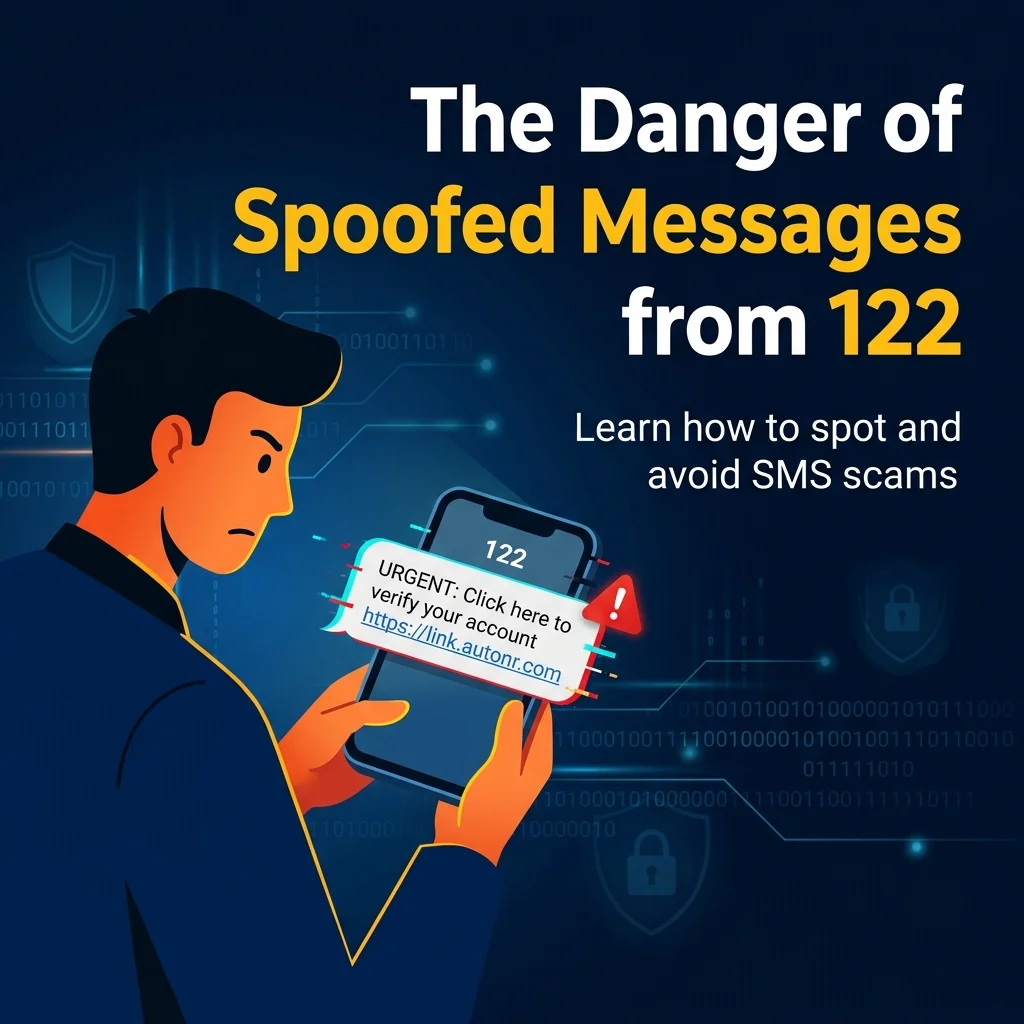
Given that 122 is a trusted and official number in China, it unfortunately becomes a prime target for scammers. There have been reported cases of individuals receiving SMS messages that appear to come from 122. These messages often claim that the recipient has a new traffic violation and include a link to check the details. This is a classic phishing scam designed to exploit people’s trust in official numbers.
How the Scam Works
The scam typically unfolds in several stages. First, the victim receives an unexpected text message that appears to come from 122. The message claims the recipient has committed a traffic violation and must pay a fine immediately. To make the message more convincing, scammers often include the victim’s correct license plate number, which they may have obtained from previous data breaches or public records.
Next, the message includes a link to a website that looks like an official government portal. However, the fake website is actually a crude imitation of a government site, designed to steal your personal and financial information. If you click the link and enter your details, the scammers can access your bank accounts, steal your identity, or use your information for other fraudulent activities.
Red Flags to Watch For
Several warning signs can help you identify these scams. First, legitimate notifications never ask you to click on links or visit external websites from the message itself. Second, legitimate messages don’t create a sense of urgency or threaten you with immediate penalties. Third, official communications always come in a standardized format that matches what you’ve received before. Finally, legitimate messages never ask for personal information like your ID number, bank details, or passwords.
What to Do If You Receive a Suspicious Message
If you receive an unexpected message from 122 with a link, don’t click it. Instead, delete the message immediately. If you’re concerned about a possible violation, call the official traffic police number directly. Don’t use the number provided in the suspicious message. Use the official number from the government website or your vehicle registration documents to verify if you have any actual violations.
Additionally, you can report the scam to the local authorities. In China, you can report suspicious messages to the anti-fraud hotline or the local police. Taking these steps helps protect both yourself and others from falling victim to these scams.
122 as a Retro Pager Code
For those who remember the days before smartphones, 122 might bring back memories of a different kind of text message. In the 1990s, before widespread SMS adoption, pagers were the primary way to send short messages. However, these early devices were limited to displaying numbers, not letters.
To communicate, people developed systems like the “Numeric Look Alike Cipher.” This clever system replaced letters with numbers that looked similar. For example, the letter ‘H’ could be represented by ‘4’ and ‘E’ by ‘3’, allowing the sender to spell out a word in numbers. As a result, 122 could be a specific code within a longer numeric string. While not a standalone term, it might have appeared as part of these encoded messages, representing a letter or a combination of letters in an old-school pager message.
How Numeric Codes Worked
Understanding how these codes worked provides interesting context. The system used numbers that visually resembled letters. For instance, ‘1’ could represent ‘I’ or ‘L’, ‘2’ could represent ‘Z’, and ‘3’ could represent ‘E’. By combining these numbers, users could spell out entire words. A message like “122” might have been part of a longer sequence that read like “I LOVE YOU” or “CALL ME” to someone who knew the code.
This communication method was particularly popular among teenagers and young adults. It allowed them to send private messages that parents couldn’t easily understand. It also created a sense of community among those who knew the codes. Today, this system is largely obsolete, but it represents an important step in the evolution of digital communication.
Why It Doesn’t Apply to Modern Texting
It’s important to note that this retro meaning doesn’t apply to modern 122 text messages in most cases. Today, 122 is almost always a system number, a service code, or a scam attempt. If you receive a message from 122 on your smartphone, it’s almost certainly not a pager code from the 1990s. However, understanding this historical context helps explain why the number appears in older communication records or in nostalgic discussions about early digital communication.
122 as a Random Number in Usernames
Occasionally, 122 appears in digital communication simply because it’s a number someone chose. A common example is when it’s used as a suffix in a screen name or username. If an older username is already taken, someone might add a number like 122 to create a unique handle. This isn’t a special code or a hidden message; it’s just a practical way to get the desired name on a platform where many names are already in use.
This usage is common across various platforms, including gaming usernames, social media handles, and email addresses. When you see 122 in this context, you can generally ignore it. It doesn’t carry any special meaning or indicate any particular behavior. It’s simply a way for users to create a unique identifier in crowded digital spaces.
How to Handle Different Types of 122 Messages
Because a 122 text message can be several different things, it’s important to know how to handle each scenario properly. Here is a practical guide based on the type of message you receive.
If You Get an Error Message
If you receive an error notification from 122 about an invalid number, the first step is to check your APN settings. Search online for the correct APN settings for your specific phone model and mobile carrier. Enter them carefully and restart your phone after making changes.
If you recently installed a new app, try uninstalling it to see if the problem stops. Pay particular attention to apps that require SMS permissions or that run in the background. As a last resort, you can try a factory reset of your phone, but remember to back up your data first. This step should only be taken if nothing else works.
If You Get an Unexpected Message from “Traffic Police”
If you are in a location where 122 is an official number and you get a message claiming to be from the traffic police, do not click on any links. A legitimate notification will provide the violation details in the text itself and won’t ask you to visit a separate website. If you are concerned, call the official traffic police number directly to verify if you have any actual violations.
Additionally, report the suspicious message to the authorities. In China, you can forward the message to the anti-fraud center or report it through the official government app. This helps authorities track and shut down scam operations.
If It’s Just a Random Number
If you see 122 as part of someone’s username or in a message that doesn’t make sense otherwise, you can usually ignore it. It’s often just a random number or an artifact from a bygone era of communication. There’s no need to take any action unless the message contains suspicious content.
General Best Practices
Regardless of the type of message you receive, several best practices apply. First, never share personal information in response to an unsolicited message. Second, never click on links from unknown senders. Third, if you’re unsure about a message, contact the official service directly using a verified number. Finally, keep your phone’s software updated to protect against security vulnerabilities.
Common Mistakes People Make with 122 Messages
Many people make mistakes when dealing with 122 text messages. Recognizing these common errors can help you avoid them.
Clicking Links Without Thinking
One of the most dangerous mistakes is clicking links in suspicious messages. When people see an official-looking number, they often assume the message is legitimate. This assumption can lead them to click links without verifying the source. Always pause and think before clicking any link, even if the message appears to come from an official number.
Assuming All 122 Messages Are Scams
Another common mistake is assuming all messages from 122 are scams. While scammers do spoof this number, 122 is also used for legitimate purposes in some regions. If you automatically assume every message is fraudulent, you might miss important notifications. The key is to evaluate each message based on its content and context, not just the sender number.
Ignoring Persistent Error Messages
Some people ignore persistent error messages from 122, hoping they’ll eventually stop. This approach rarely works. If your phone is repeatedly sending messages to 122, you need to address the underlying issue. Ignoring the problem can lead to higher phone bills, drained battery life, and continued frustration.
Expert Tips for Troubleshooting 122 Issues
Based on user experiences and technical expertise, here are some effective troubleshooting tips for resolving 122 issues.
Check Your APN Settings First
Start by verifying your APN settings. Access your phone’s network settings and compare the APN configuration to the recommended settings from your carrier. If you find any discrepancies, correct them and restart your phone. Many users report that this simple step resolves the issue immediately.
Identify the Responsible App
If APN settings aren’t the problem, the next step is identifying which app is sending messages to 122. On Android devices, you can check your messaging app’s sent messages folder to see if any messages were sent to 122. On iPhones, this is more difficult, but you can check your cellular usage to see which apps are using SMS. If you identify a suspicious app, uninstall it and see if the problem stops.
Contact Your Carrier
If you can’t resolve the issue on your own, contact your mobile carrier’s technical support. They can check your account for unusual activity and provide specific guidance for your device and network. They may also be able to block messages to 122 on their end if the issue is network-related.
When to Seek Professional Help
In some cases, troubleshooting 122 issues requires professional assistance. Here are signs that you should seek help from a technician or your carrier.
Persistent Problems After Troubleshooting
If you’ve tried all the troubleshooting steps and the problem persists, it’s time to seek professional help. This could indicate a deeper system issue that requires technical expertise to resolve. A technician can examine your phone’s settings and identify problems that aren’t obvious to the average user.
Security Concerns
If you suspect your phone has been compromised by malware or a malicious app, professional assistance is essential. A security expert can scan your device for threats and remove any harmful software. They can also help you secure your accounts and protect your personal information.
High Phone Bills
If your phone bill has unexpectedly increased due to messages to 122, contact your carrier immediately. They can investigate the charges and potentially reverse them if they were caused by a technical error. They can also help you prevent future occurrences.
The Evolution of Short Codes and Messaging
Understanding 122 requires understanding the broader evolution of short codes and messaging systems. This context helps explain why the number exists and how it’s used today.
What Are Short Codes?
Short codes are special telephone numbers that are significantly shorter than full phone numbers. They are primarily used for high-volume messaging services like marketing campaigns, verification codes, and alerts. Short codes are easier to remember and more efficient for bulk messaging than standard numbers.
How Short Codes Work
Companies lease short codes from mobile carriers for specific purposes. Each short code is associated with a particular service or campaign. When you send a message to a short code, it’s routed to the company’s messaging platform. This allows companies to manage large volumes of messages efficiently.
The Future of Messaging Systems
As technology evolves, so do messaging systems. Rich Communication Services (RCS) and other advanced protocols are beginning to replace traditional SMS. These systems offer enhanced features like read receipts, typing indicators, and high-quality media sharing. However, short codes will likely remain relevant for authentication and verification purposes for the foreseeable future.
Frequently Asked Questions
Is 122 a legitimate phone number?
Yes, 122 can be a legitimate number, but it depends on your location. In China, it’s the official emergency number for the traffic police. In other places, it’s often a system number used by carriers for automated notifications. You can usually tell if it’s legitimate by the type of message you receive.
Why do I keep getting texts from 122?
This is often due to a technical issue. Your phone may have incorrect settings, or there might be a background app repeatedly trying to send a message to an invalid destination. If the messages are frequent, check your APN settings, review recently installed apps, or contact your carrier for support.
Is a text from 122 a scam?
In some cases, yes. In regions where 122 is an official service number, scammers have been known to spoof this number to send fake violation alerts with phishing links. Always be suspicious of messages asking you to click on links or provide personal information.
What does “122 Error Invalid Number” mean?
This is a system-generated error message. It means your phone sent an SMS to 122, but your carrier doesn’t recognize 122 as a valid number for receiving texts. The message is essentially your carrier’s way of saying the text couldn’t be delivered because the number is wrong.
How do I stop my phone from sending texts to 122?
To stop these messages, you need to identify the root cause. Check your APN settings to ensure they are correct. Look for any suspicious or recently installed apps. In some cases, a factory reset may be necessary to remove a persistent malicious app. If the problem persists, contact your mobile carrier’s technical support.
What were pager codes like 122 used for?
In the era before smartphones, pagers could only display numbers. People used a “Numeric Look Alike Cipher” where numbers stood in for letters. A code like 122 could have been part of a longer number string representing a word or a short message, allowing someone to communicate without needing a full keyboard.
Can I block messages from 122?
Yes, you can block messages from 122 on most smartphones. On iPhone, go to Settings > Messages > Blocked Contacts. On Android, open the messaging app, open the conversation, and select “Block number.” However, if the messages are legitimate service notifications, blocking might cause you to miss important alerts.
What should I do if I accidentally clicked a link from 122?
If you clicked a link in a suspicious message from 122, take immediate action. First, close the browser tab immediately. Second, run a security scan on your device. Third, change any passwords you may have entered. Finally, monitor your bank accounts and credit cards for unauthorized activity.
Conclusion
A 122 text message can represent many different things, from a frustrating system error and a relic of retro paging to a legitimate, albeit region-specific, service number. By understanding the context—whether it’s a system notification, a potential scam, or just a random digit—you can take the appropriate action and protect yourself. Staying informed is the best way to handle any unexpected message you receive.

Amelia Brooks is a passionate writer specializing in text meanings, slang, and digital communication trends. She simplifies modern messaging to help readers understand every text with ease.