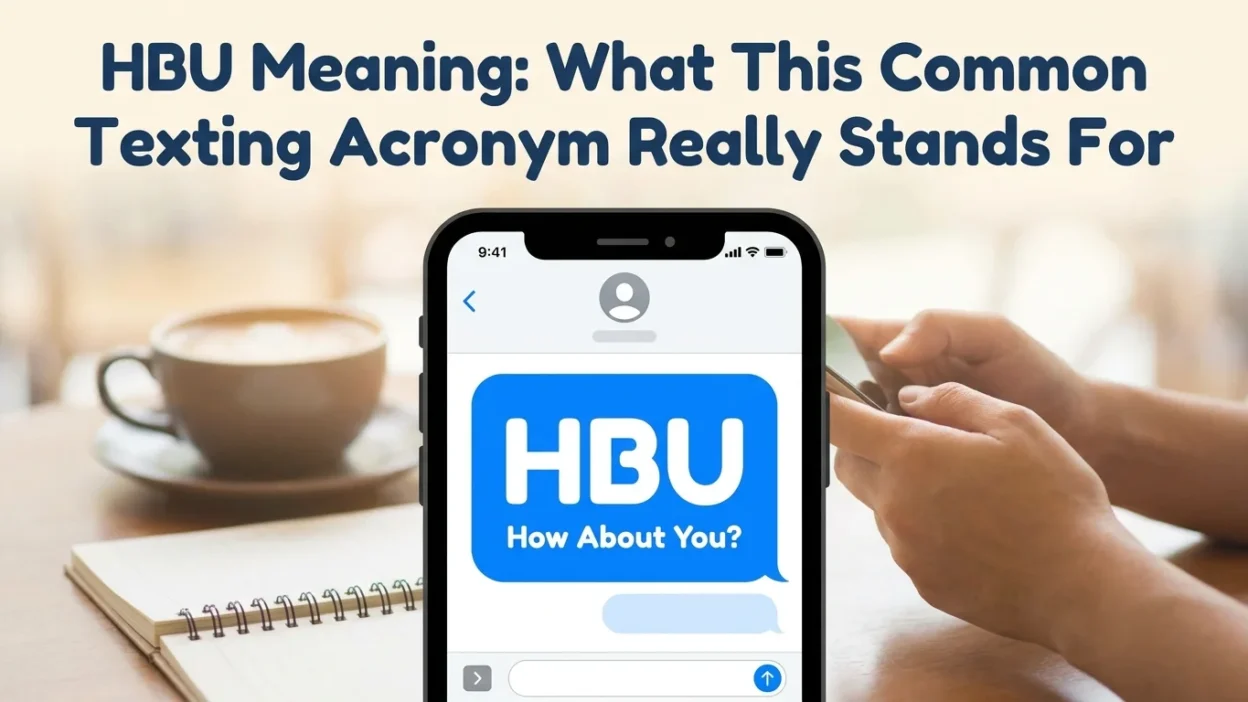
You’re texting a friend, and the conversation is flowing. Then you see it: “”hbu meaning”?” Maybe you pause for a second, wondering if it’s a typo or some secret code. Don’t worry — you’ve just encountered one of the most common chat abbreviations in modern digital communication. Whether you’re new to texting slang or just want to confirm you’re using it correctly, this guide covers everything you need to know about this popular acronym.
HBU stands for “How About You?” It’s a quick and casual way of asking someone the same question back in a conversation. Instead of typing out “How about you?” every time, people simply say “hbu?” to keep conversations fast, simple, and natural.
What Does HBU Mean in Texting?
In the fast-paced world of digital communication, efficiency matters. HBU serves as a convenient shorthand that keeps conversations flowing without interrupting the natural rhythm of texting. When someone asks you a question and you want to return it, HBU does the job in just three letters.
Example:
Person A: “I’m doing good today. HBU?” Person B: “Same here, just relaxing.”
The meaning is straightforward — HBU returns the question to the other person, showing interest in their thoughts or feelings. It’s a way of saying “I care about your response too” without adding extra words.
Another example:
Person A: “I’m heading to the gym later. HBU?” Person B: “I might go for a run instead. Thanks for asking!”
HBU vs WBU: What’s the Difference?
You might also see “WBU” in texts, which stands for “What about you?” While the two are often used interchangeably, there’s a subtle difference in how they’re typically used.
AcronymMeaningBest Used WithHBUHow About You?Questions starting with “How”WBUWhat About You?Questions starting with “What”
Examples of HBU:
“How was your weekend? I had a great time. HBU?” ✅ “How are you feeling today? I’m better. HBU?” ✅
Examples of WBU:
“What do you think about the movie? I loved it. WBU?” ✅ “What are you doing later? I’m free. WBU?” ✅
In practice, though, most people use them interchangeably in casual chats. The distinction is minor, and both serve the same purpose — keeping the conversation going.
When to Use HBU (And When to Skip It)
Knowing when to use HBU is just as important as knowing what it means. Using it in the wrong context can make you seem unprofessional or dismissive.
✅ Good Situations for HBU
HBU works best in relaxed, friendly conversations where speed and informality are valued:
- Texting friends – “I’m watching Netflix. hbu?”
- Snapchat streaks – “Just woke up lol hbu?”
- Instagram DMs – “Busy day today, hbu?”
- TikTok comments – “I love this song hbu?”
- Gaming chats – “I’m waiting for the match. hbu?”
- Dating apps – “I like hiking and live music. HBU?”
- Group chats – “Anyone free this weekend? hbu guys?”
- Family texts – “Mom made dinner. hbu?”
❌ Situations to Avoid
HBU is too casual for certain contexts. Skip it in these situations:
- Formal emails – Too casual and unprofessional for work correspondence
- Job interviews – Even written communication should remain formal
- Professional work messages – Use full phrases with colleagues and clients
- Academic writing – Not appropriate for school, research papers, or essays
- Serious or sensitive topics – A full sentence shows more care and respect
- Communicating with elders – Some older generations may not understand the abbreviation
- Customer service interactions – Always use professional language
Real-Life Examples of HBU in Action
Seeing HBU in context helps you understand how natural it feels in everyday conversation.
Casual Check-in:
“I’m at home chilling, hbu?”
Mood Conversation:
“I’m kinda tired today.” “Same here, hbu?”
Opinion Sharing:
“I really don’t like sushi, hbu?”
Flirty Chat:
“I miss you 😄” “Aww same, hbu?”
Weekend Plans:
“I’m going to the beach this weekend. HBU?” “I’m staying home and catching up on sleep!”
Work Chat (Informal):
“This project is killing me. HBU?” “Same, but we’re almost done!”
Social Media Comment:
“This is my favorite song right now. HBU guys?” “I prefer the original version tbh.”
How to Respond When Someone Uses HBU
When someone sends you HBU, your response depends on what they asked initially:
If they asked “How are you?”:
“I’m doing well! HBU?” → “Same here, thanks for asking!”
If they asked “What are you doing?”:
“I’m working on my laptop. HBU?” → “Just relaxing at home!”
If they shared an opinion:
“I love that movie. HBU?” → “I thought it was okay, not my favorite.”
If they shared weekend plans:
“I’m hiking this weekend. HBU?” → “I’m visiting my parents!”
The key is to answer their original question first, then use HBU to return it.
Other Meanings of HBU
While “How About You?” is the most common meaning, HBU can stand for other things in specific contexts. Understanding these can help avoid confusion.
ContextMeaningTires/Rubber IndustryHeat Build Up – refers to heat generation in tiresBusiness/Customer ServiceHow About You – same as texting meaningMedicalHospital Based Unit – a healthcare facility termEducationHome Based Unit – sometimes used in homeschooling contexts
In 99% of texting and social media situations, HBU simply means “How About You?” The other meanings are industry-specific and rarely encountered in everyday digital communication.
The Psychology Behind Texting Abbreviations Like HBU
Why do we use abbreviations like HBU in the first place? There are several psychological and practical reasons:
Efficiency: Typing “hbu” takes a fraction of a second compared to “How about you?” In fast-paced conversations, every second counts.
Informality: Abbreviations signal a casual, relaxed relationship. Using HBU with someone shows you’re comfortable with them.
Social Bonding: Sharing slang creates in-group identity. When both people understand and use HBU, it reinforces their connection.
Emotional Tone: HBU feels more friendly and less formal than “How about you?” It carries a lighter, more playful energy.
Digital Native Culture: Using abbreviations like HBU signals that you’re digitally literate and part of modern internet culture.
The Evolution of Texting Slang
HBU is part of a broader ecosystem of texting abbreviations that emerged in the early 2000s. Here’s how it fits into the bigger picture:
Early 2000s:
- Basic acronyms like LOL, BRB, and OMG emerged
- SMS had character limits, making abbreviations essential
- T9 predictive text made typing more time-consuming
Late 2000s – Early 2010s:
- Smartphones and full keyboards reduced the need for abbreviations
- But abbreviations became cultural markers, not just practical tools
- HBU, WBU, and similar terms became standard
Modern Era:
- Abbreviations like HBU are fully normalized
- New slang continues to emerge on platforms like TikTok
- AI and autocorrect haven’t replaced the social function of abbreviations
Future Trends:
- Some abbreviations will fade, but HBU has shown staying power
- It’s simple, useful, and serves a clear communication function
How to Respond When Someone Uses HBU
When someone sends you HBU, your response depends on what they asked initially.
If they asked “How are you?”:
“I’m doing well! HBU?” → “Same here, thanks for asking!”
If they asked “What are you doing?”:
“I’m working on my laptop. HBU?” → “Just relaxing at home!”
If they shared an opinion:
“I love that movie. HBU?” → “I thought it was okay, not my favorite.”
If they shared weekend plans:
“I’m hiking this weekend. HBU?” → “I’m visiting my parents!”
Frequently Asked Questions About HBU
Is HBU considered rude?
No. HBU is a friendly and neutral way to keep a conversation going. It shows you’re interested in the other person’s response. However, like all slang, context matters — it’s perfect for friends but too casual for professional settings.
Does HBU have to be in all caps?
No. You’ll often see it typed in lowercase (“hbu”) as well. Both variations are perfectly acceptable. Some people use uppercase for emphasis, while others use lowercase for casual convenience.
Can I use HBU on social media?
Yes. It’s commonly used in comments, captions, and messages across all platforms — TikTok, Instagram, Snapchat, Twitter, Facebook, and more.
Is HBU the same as “and you?”
Yes, it serves the same purpose but is more casual and quicker to type. “And you?” is slightly more formal but means the same thing.
Should I use HBU in emails?
No. In formal emails, it’s better to write “How about you?” or “And you?” fully to maintain professionalism. Save HBU for texts and social media.
What’s the difference between HBU and WBU?
HBU typically follows questions starting with “How” (e.g., “How are you?”), while WBU follows questions starting with “What” (e.g., “What are you doing?”). However, many people use them interchangeably.
Can I use HBU with someone I’ve just met?
It depends on the context. If you’re chatting informally on a dating app or social media, it’s fine. If you’re in a more formal situation or talking to someone older, it’s better to use full words.
Is HBU used internationally?
Yes, HBU is used internationally, particularly in English-speaking countries and online English-language communities. Its popularity has spread globally through social media.
Conclusion: Mastering This Simple Texting Acronym
HBU is a small but mighty part of modern digital communication. It’s a simple way to keep conversations flowing, show interest in others, and save a few keystrokes in the process.
The key to using HBU effectively is knowing your audience. Use it with friends and peers in casual conversations, but avoid it in professional or formal settings where it might seem out of place. When in doubt, spelling out “How about you?” is always a safe choice.
Like all texting abbreviations, HBU is part of the shared language that makes digital communication feel natural and connected. It’s not just about saving time — it’s about signaling that you’re part of the same digital culture. By understanding and using HBU appropriately, you’re not just communicating more efficiently — you’re connecting more effectively.
So next time someone asks how you’re doing, feel free to reply: “I’m great, hbu?” — and keep the conversation going.

Amelia Brooks is a passionate writer specializing in text meanings, slang, and digital communication trends. She simplifies modern messaging to help readers understand every text with ease.