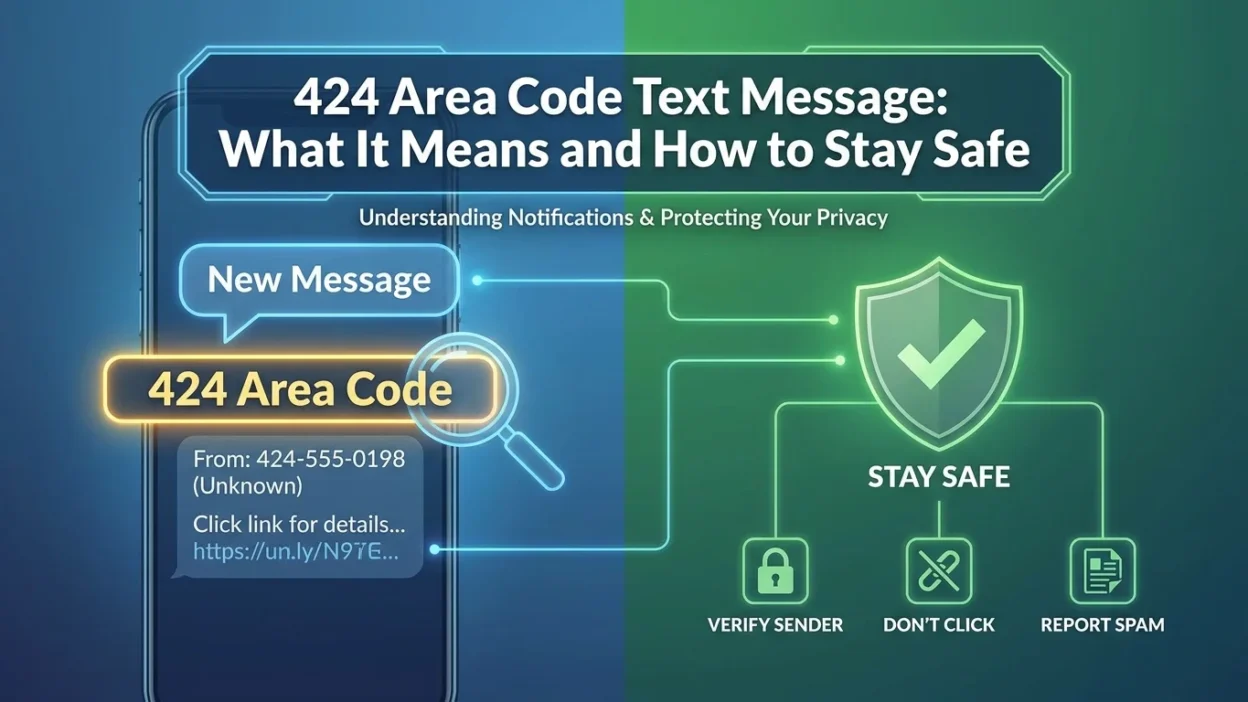
Receiving a text message from a 424 area code can be confusing, especially if you don’t know anyone in Southern California. You might wonder who’s reaching out, why they’re texting you, and whether it’s legitimate or a scam. With spam texts on the rise, it’s natural to feel cautious. This guide covers everything you need to know about the 424 area code, why you might receive messages from it, and how to protect yourself from potential scams.
What Is the 424 Area Code?
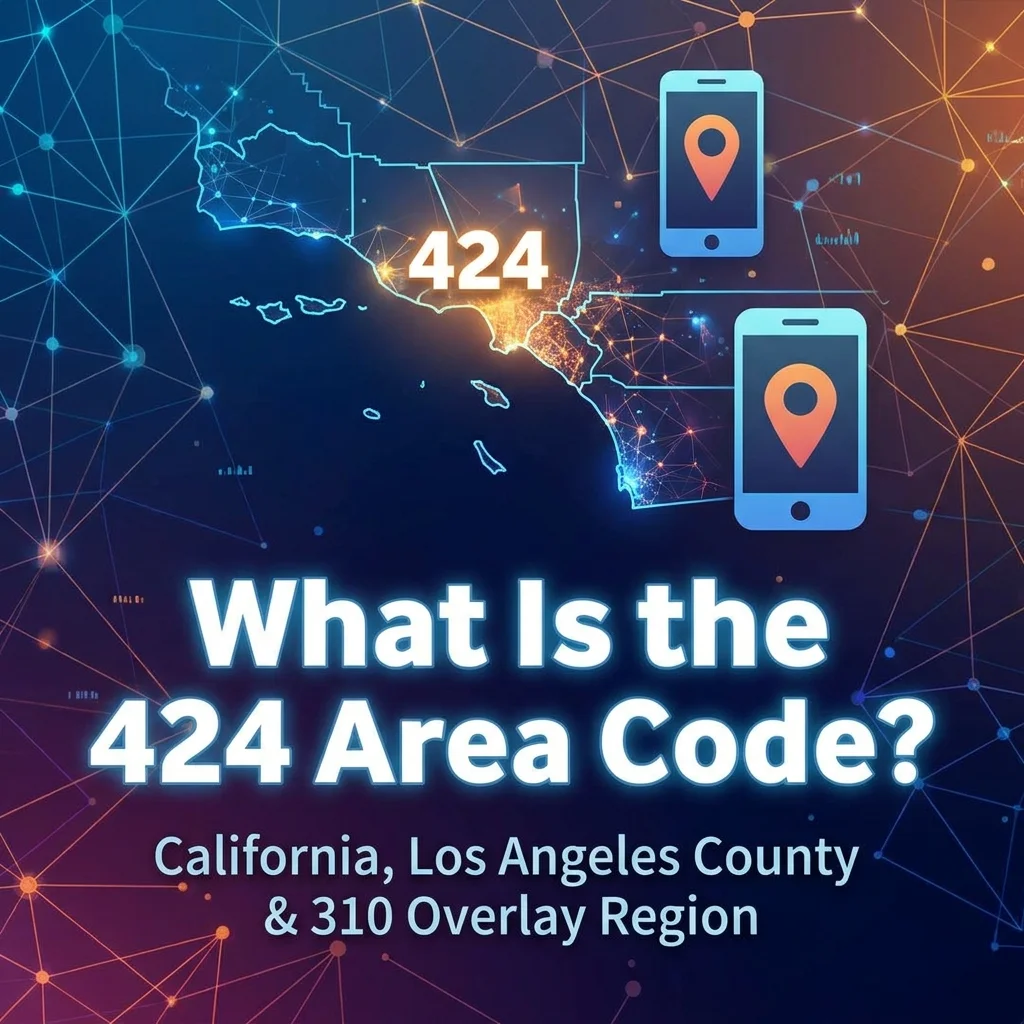
The 424 area code was added in 2006 as an overlay to the existing 310 area code, serving the West Los Angeles and South Bay areas of Los Angeles County. It was introduced because the region was running out of phone numbers. The 424 area code covers cities including:
- Los Angeles
- Santa Monica
- Beverly Hills
- Torrance
- Inglewood
- Compton
- Redondo Beach
- Culver City
- Carson
- El Segundo
- Hawthorne
- Hermosa Beach
- Manhattan Beach
- Palos Verdes Estates
If you receive a call or text from this area code, it could be from someone you know, a legitimate business, or a scammer using a spoofed number to make their message look local.
Why You Might Receive a 424 Text Message
There are several legitimate reasons you might get a text from a 424 number, but there are also plenty of scam-related reasons to be aware of.
Legitimate Reasons
- A friend or family member who lives in the Los Angeles area
- A business you’ve interacted with that operates in Southern California
- A delivery service or restaurant confirming an order
- A callback or follow-up from a company you contacted
- A healthcare provider confirming an appointment
- A school or university sending updates or alerts
- A real estate agent following up on a property inquiry
- A travel agency confirming reservations
Scam-Related Reasons
- Scammers spoof local area codes to make their messages seem trustworthy
- Phishing attempts disguised as bank alerts or delivery notifications
- Fake job offers or “too good to be true” opportunities
- Attempts to verify if your number is active so they can sell it to other scammers
- Fake lottery or prize winnings
- Debt collection scams claiming you owe money
- Romance scams where scammers pretend to be someone interested in you
- Tech support scams claiming your device has been compromised
Common 424 Area Code Scams to Watch For
Based on user reports and consumer protection agencies, here are the most common scam types coming from 424 numbers:
Scam TypeWhat HappensWarning SignsBank PhishingText claims to be from your bank and asks you to verify account information or click a linkUrgent language, request for personal info, generic greetingsFake Delivery ScamsMessage says a package is waiting and asks you to confirm payment or shipping detailsUnexpected package notifications, requests for paymentFake Job OffersUnsolicited text offering high-paying work with little experience requiredToo good to be true, no interview process, requests for personal infoCraigslist/OfferUp ScamsScammer sends a fake cashier’s check for more than the item’s price and asks you to send the differenceOverpayment, urgency, pressure to act quicklyPrize/Winning ScamsText claims you’ve won a prize and need to provide personal info to claim itUnexpected winnings, requests for personal info or feesPolitical Poll ScamsAsking who you plan to vote for — a tactic to gather personal dataUnsolicited political texts, requests for personal infoFake Tech SupportClaims there’s a problem with your computer or accountUrgent warnings, requests for remote access or paymentRomance ScamsScammer pretends to be interested in a relationship to gain trust and moneyLove bombing, requests for money.
How to Spot a 424 Area Code Scam
Scammers are getting more sophisticated, but there are still clear warning signs you can look for.
Red Flags to Watch For
Unsolicited Contact: You didn’t initiate the conversation. Legitimate companies usually don’t text you out of the blue unless you’ve opted in.
Urgency or Threats: Messages that pressure you to act immediately — “Your account will be closed!” or “Respond now or your package will be returned!”
Requests for Personal Info: Any message asking for passwords, Social Security numbers, bank details, or verification codes is almost certainly a scam.
Suspicious Links: Links that don’t match the official website of the company they claim to represent. For example, instead.
Too Good to Be True: Job offers with high pay and no experience required, or prizes you never entered to win.
Generic Greetings: Messages that start with “Dear Customer” or “Dear User” instead of your actual name.
Poor Grammar or Spelling: Many scam texts come from overseas and contain noticeable errors.
Requests for Payment: Any request for payment via gift cards, wire transfer, or cryptocurrency is almost certainly a scam.
Unsolicited Attachments: Never open attachments from unknown senders — they may contain malware.
What to Do If You Get a Suspicious 424 Text
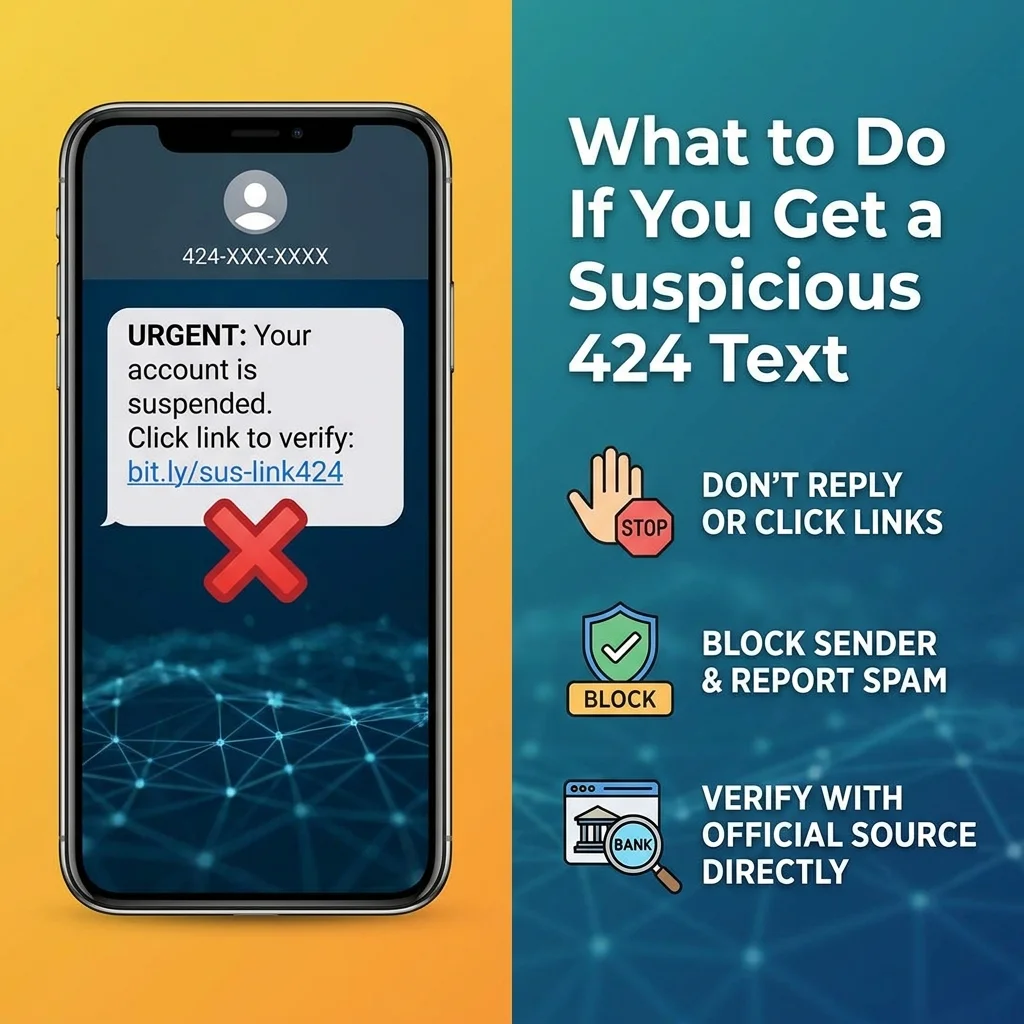
If you receive a text from a 424 number that seems suspicious, follow these steps:
1. Don’t Reply
Responding tells scammers your number is active, which can lead to more spam. Never reply with “STOP” to an unknown scammer — it confirms your number is real and active. Even replying “Who is this?” tells them they’ve reached a working number.
2. Don’t Click Links
Links in scam texts often lead to fake websites designed to steal your information or install malware on your phone. Even if the link looks legitimate, it’s safer to type the company’s web address directly into your browser.
3. Don’t Call Back
Don’t call the number that texted you. Scammers may use premium-rate numbers that charge you for the call. If you need to contact a company, look up their official number separately.
4. Report It
- Forward the message to 7726 (SPAM) — this helps carriers block these numbers
- File a complaint with the FTC
- Report to your phone carrier — AT&T, Verizon, T-Mobile, and others have spam reporting systems
- Report to the FCC if it’s a robocall or spam text
5. Block the Number
On most phones, you can tap the number at the top of the message, select “Info,” and choose “Block this Caller.” Most iPhones and Android phones also have a “Report Junk” option that helps carriers identify spam.
6. Run a Reverse Phone Lookup
Search the number online to see if others have reported it as spam. Several websites track reported scam numbers, including:
- WhoCallsMe
- 800Notes
- SpamCalls.net
- YouMail
- CallerSmart
7. Delete the Message
After reporting and blocking, delete the message to avoid accidentally clicking anything later.
How to Protect Yourself From Future Scams
Prevention is better than dealing with the aftermath of a scam. Here are some tips to stay safe:
Enable Spam Protection
Most phones have built-in spam protection features:
- iPhone: Go to Settings > Messages > Filter Unknown Senders
- Android: Open the Phone app > Settings > Caller ID & Spam > Enable spam protection
Register with the Do Not Call Registry
Register your number at to reduce legitimate telemarketing calls. While this doesn’t stop scammers, it reduces the overall number of unwanted calls.
Be Careful What You Share Online
Scammers often find phone numbers through social media, public records, and data breaches. Be cautious about sharing your number publicly.
Use a Second Phone Number
Consider using a secondary phone number for online purchases, dating apps, and other situations where you don’t want to share your primary number. Apps like Google Voice offer free secondary numbers.
Regularly Check Your Accounts
Monitor your bank and credit card accounts for unauthorized transactions. The earlier you catch fraud, the easier it is to resolve.
Educate Yourself
Stay informed about the latest scams. The FTC, FCC, and consumer protection websites regularly update their resources with new scam information.
The Numbers Don’t Lie: Why Spam Texts Are Increasing
Spam texts have become a massive problem in recent years. Here are some statistics that put the issue in perspective:
StatisticSourceAmericans received over 225 billion spam texts in 2023RobokillerThe average person receives 14-15 spam texts per monthRobokillerSpam texts increased by 157% between 2021 and 2023Robokiller70% of consumers report receiving more spam texts than everConsumer ReportsFinancial losses from text scams exceeded $330 million in 2022FTC
The 424 area code is just one of many being exploited by scammers. As technology evolves, so do their tactics. Staying informed and cautious is your best defense.
Should You Answer Calls from 424 Numbers?
If you don’t recognize the number, it’s safest to let it go to voicemail. Legitimate callers will typically leave a message; scammers rarely do. If the caller leaves a voicemail claiming to be from a company you don’t recognize, don’t call back using the number they provide — look up the company’s official contact information separately.
What to Do If You Accidentally Answer
If you do pick up and realize it’s a scam:
- Don’t engage. Hang up immediately.
- Don’t answer personal questions.
- Don’t press any numbers — this can sometimes connect you to a premium-rate service.
- Block the number afterward.
You MAy Also Like
Frequently Asked Questions About 424 Area Code Texts
Is the 424 area code only for California?
Yes, the 424 area code serves parts of Los Angeles County in California. However, scammers can spoof numbers to make it look like they’re calling from anywhere, so the caller might not actually be in California.
What if I get a 424 text claiming to be my bank?
Do not click any links or reply. Contact your bank directly using the number on their official website or the back of your card to verify if they sent the message. Banks typically don’t ask for sensitive information via text.
Can I stop getting 424 spam texts?
Yes. Forward spam texts to 7726 (SPAM), block the numbers, and report them to your carrier. Over time, this helps carriers identify and block spam sources. You can also use third-party spam-blocking apps.
Is every 424 text a scam?
No. Many legitimate people and businesses use the 424 area code. The key is to check if the message is expected and comes from a source you recognize. If you’re unsure, contact the company through official channels.
What do I do if I’ve already clicked a scam link?
If you clicked a suspicious link:
- Close the website immediately
- Don’t enter any information
- Run a security scan on your device
- Change your passwords
- Monitor your accounts for suspicious activity
- Consider freezing your credit if you entered sensitive information
How do scammers get my phone number?
Scammers obtain phone numbers through various means:
- Data breaches and leaks
- Public records and directories
- Social media profiles
- Websites that sell user data
- “Free” offers and contests
- Random number generation
Can I report a scam text anonymously?
Yes. When you forward a suspicious text to 7726, your report is anonymous. The FTC also accepts anonymous complaints through their website.
Are there legitimate businesses that use the 424 area code?
Yes, many legitimate businesses operate in the 424 area code region. If you’ve interacted with a company in Southern California, they may legitimately contact you from a 424 number.
What should I do if I’ve already given money or personal info?
If you’ve been scammed:
- Contact your bank or credit card company immediately
- Place a fraud alert on your credit report
- File a report with the FTC
- File a report with your local police department
- Change passwords for affected accounts
- Monitor your credit reports for suspicious activity
Conclusion: Stay Safe and Stay Informed
The 424 area code serves real people and businesses in Los Angeles County, but it’s also being used by scammers who spoof numbers to look local. The best defense is simple: don’t reply to unknown texts, don’t click links, and report suspicious messages. When in doubt, contact the company directly through official channels — not through the number that texted you.
Staying informed about common scams and knowing what to look for can protect you from financial loss and identity theft. Remember, legitimate companies won’t pressure you to act immediately or ask for sensitive information via text. If something feels off, trust your instincts and investigate before responding.

Amelia Brooks is a passionate writer specializing in text meanings, slang, and digital communication trends. She simplifies modern messaging to help readers understand every text with ease.