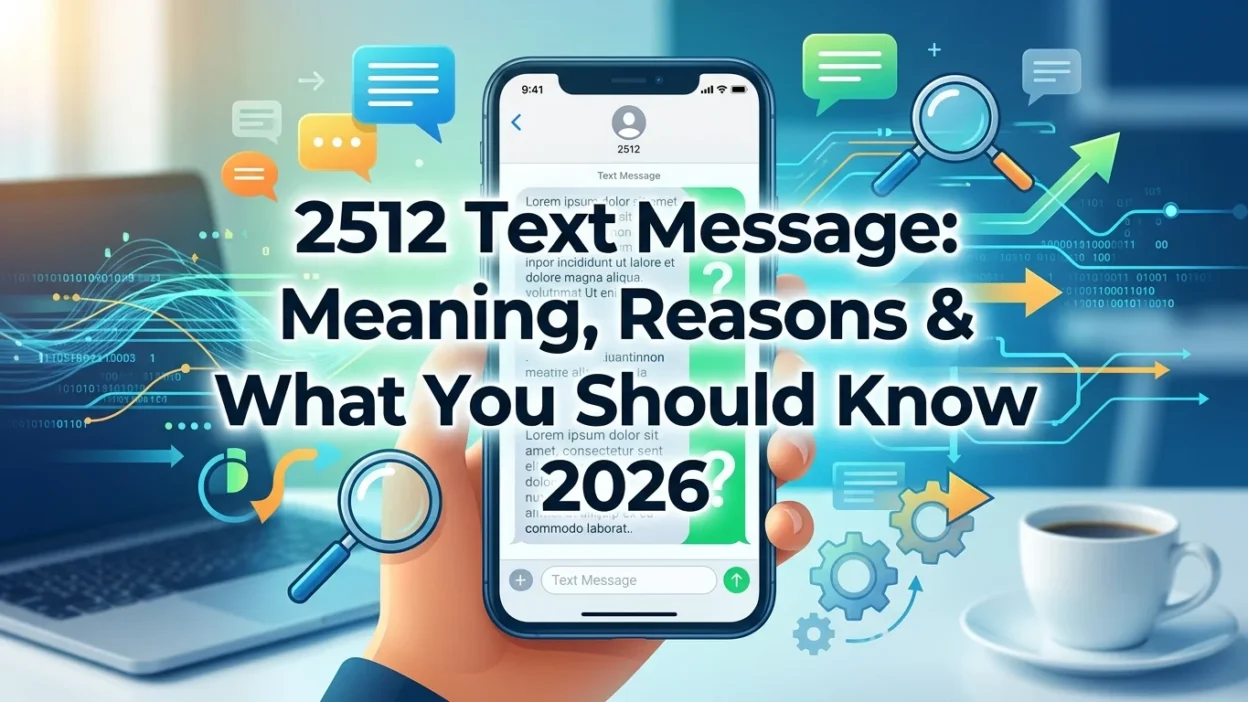
Have you recently received a text from the four-digit number 2512 and wondered who it was? You’re not alone. Many T-Mobile customers see this short code appear on their phones and immediately question its legitimacy. The confusion is understandable, as the number 2512 doesn’t look like a typical phone number or business contact.
The 2512 text message is actually an official communication channel used by T-Mobile for promotional campaigns, customer surveys, and service alerts . Unlike random spam messages or unknown numbers, 2512 is a registered short code that the wireless carrier uses for high-volume, automated messaging . This guide explains everything you need to know about the 2512 short code, why you might receive messages from it, and how to handle them safely.
📌 What Is the 2512 Short Code?
The sequence 2512 is not a geographical area code but rather a dedicated SMS short code. Short codes are specialized 4-6 digit numbers that organizations use for mass communication and automated services . T-Mobile has officially registered 2512 as one of its campaign short codes, listing it alongside other codes like 1016, 1017, and 2294 on its support page .
This means the 2512 text message is a legitimate form of communication from T-Mobile. The carrier uses this channel to reach customers with important information, promotional offers, and feedback requests. Multiple independent sources confirm that T-Mobile owns and operates this short code .
📨 Why Did I Get a 2512 Text Message?
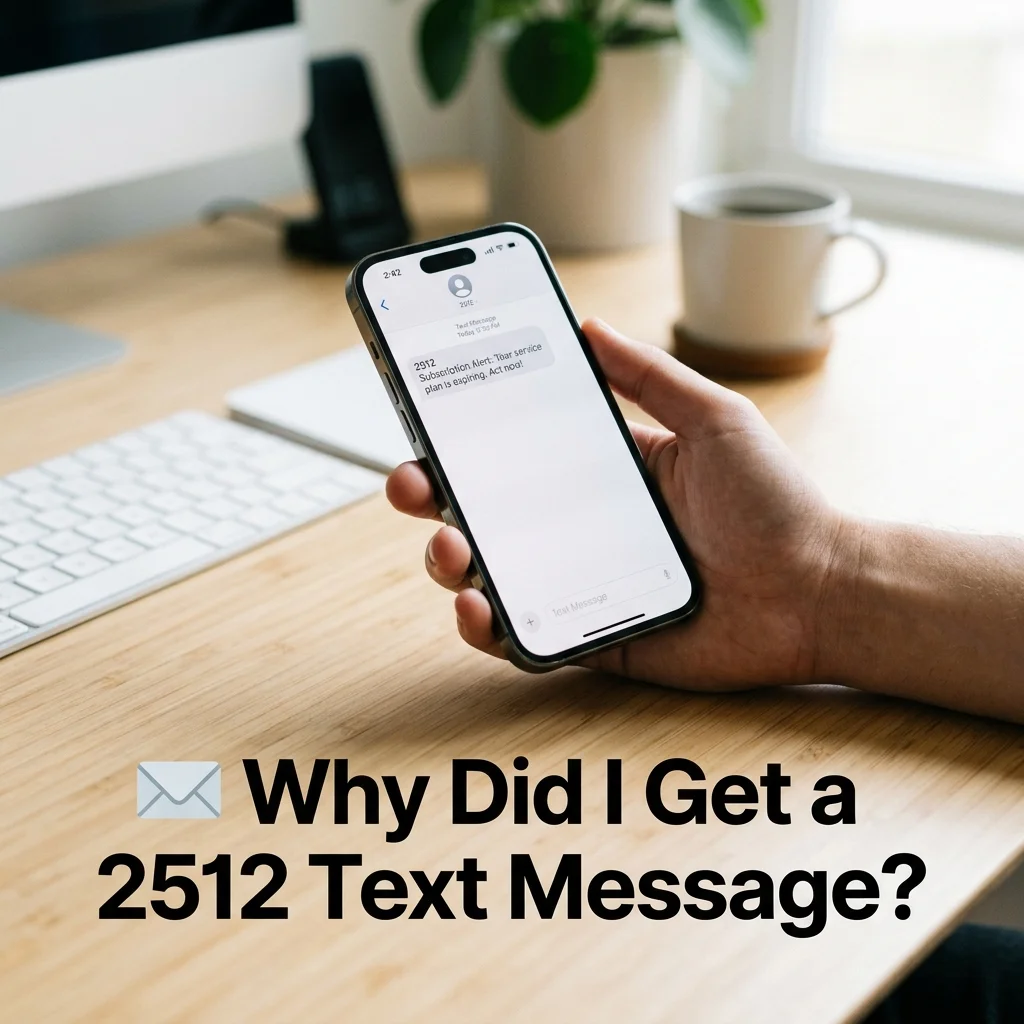
There are several legitimate reasons why you might receive a 2512 text message. Understanding these purposes can help you determine whether the message deserves your attention or if you can safely ignore it.
Promotional Offers and Marketing Campaigns
The most common reason for receiving a 2512 text message is promotional marketing. T-Mobile uses this short code to send information about plan upgrades, device deals, T-Mobile Tuesdays offers, and other marketing campaigns . These messages are often tailored to customers based on their usage patterns and preferences.
For example, you might receive a message like: “Upgrade to our latest Unlimited plan and get a free smartphone!” These promotions are designed to keep customers informed about new products and services.
Customer Surveys and Feedback Requests
Another frequent use of the 2512 short code is for gathering customer feedback. If you recently contacted T-Mobile support, visited a store, or interacted with the carrier in some way, you might receive a survey request from 2512 .
These surveys help T-Mobile understand customer satisfaction and identify areas for improvement. The timing is important here—if you recently had an interaction with T-Mobile, a survey request from 2512 makes perfect sense and is a standard follow-up process.
Account Notifications and Service Alerts
T-Mobile also uses the 2512 short code for important account-related notifications. These can include bill reminders, payment confirmations, plan modifications, and service changes . In some cases, the carrier may send service alerts about network outages, planned maintenance, or system updates through this channel.
These messages are informational only and help keep customers updated about their accounts and services.
Contests and Sweepstakes
Occasionally, T-Mobile runs contests and sweepstakes through the 2512 short code. Customers can participate by texting specific keywords to the number, potentially winning prizes and rewards .
🔒 Is the 2512 Text Message Safe or a Scam?
The short code 2512 itself is legitimate and registered to T-Mobile . However, the safety of any message depends on its content. While the number is genuine, scammers can sometimes spoof short codes to send phishing messages, also known as “smishing” attacks .
Here is how to distinguish between a legitimate T-Mobile message and a potential scam:
Legitimate T-Mobile MessagePotential Phishing AttemptLinks go to t-mobile.com or t-mo.coLinks use bit.ly, t-moblle.com (misspelled), or unfamiliar domainsMessage asks for feedback or offers promotionsMessage demands urgent action or threatens account suspensionDoes not request sensitive dataRequests PIN, password, Social Security Number, or payment infoProfessional tone with clear purposeContains grammatical errors or vague information
Red Flags to Watch For
Legitimate promotional and survey messages from 2512 will never ask for sensitive personal information such as your account PIN, password, Social Security Number, or payment details . If a message creates a false sense of urgency with phrases like “Your account has been suspended” or “Click this link now to verify your details,” treat it with extreme caution .
T-Mobile will never ask for your credentials through an unsolicited text message. When in doubt, verify any suspicious message by contacting T-Mobile customer support directly through official channels like the T-Life app, website, or by dialing 611 from your phone .
📱 What If I’m Not a T-Mobile Customer?
Many non-T-Mobile customers report receiving messages from 2512. This confusion is common and almost always harmless. There are several possible explanations :
- Wrong Number Entry: A T-Mobile customer may have mistyped their phone number during signup, accidentally using your number instead.
- Former Customer: You may have switched carriers, but your number is still in T-Mobile’s system, causing residual notifications.
- Database Error: T-Mobile’s system may not have purged outdated records.
None of these scenarios indicate identity theft or compromise. If you’re receiving messages for accounts you never created, you can safely ignore them or reply with “STOP” to unsubscribe.
🛑 How to Stop Messages from 2512
If you find the promotional messages from 2512 annoying or excessive, you can easily opt out. The process is quick, free, and legally required for all short code providers .
Reply with STOP
The simplest method is to reply directly to the message with the word “STOP” . You should receive an automated confirmation message stating that you have been unsubscribed and will no longer receive messages from that campaign.
Important Note About Opting Out
Opting out of promotional messages from 2512 will not affect other important T-Mobile communications . Because T-Mobile uses different short codes for different purposes (e.g., separate codes for billing alerts, two-factor authentication, and device protection), unsubscribing from 2512 will not prevent you from receiving critical security alerts, verification codes, or urgent service notifications from other T-Mobile short codes.
Report Unwanted Messages
If the messages persist after opting out, you can forward the entire message to the short code 7726 (SPAM) for T-Mobile to investigate and block the campaign . This helps the carrier identify and address any issues with their messaging systems.
📜 A Brief History of 2512
Interestingly, the 2512 short code has a long history with T-Mobile. In 2004 and 2005, the carrier ran promotional campaigns offering free MMS messages to customers who registered under the short code 2512 . This demonstrates that T-Mobile has maintained this short code for over two decades, further confirming its legitimacy as an official communication channel.
❌ Common Mistakes About 2512 Text Messages
Mistake 1: Assuming All 2512 Messages Are Spam
While some users perceive these messages as spam, the 2512 short code is a legitimate T-Mobile communication channel. The messages serve specific purposes like promotions, surveys, and account notifications.
Mistake 2: Sharing Sensitive Information
Never share personal information like PINs, passwords, or payment details in response to a 2512 message. Legitimate T-Mobile messages will never ask for such information.
Mistake 3: Ignoring Service Alerts
While you may ignore promotional messages, account notifications and service alerts can contain important information about your plan, billing, or network status. Review these messages carefully.
👑 Expert Tips for Managing 2512 Messages

Verify Suspicious Messages
If a message from 2512 seems suspicious, contact T-Mobile customer support directly through official channels. Do not use contact information provided in the suspicious message.
Use the T-Life App
For the most accurate and up-to-date account information, use the T-Life app or log in to My T-Mobile online. This avoids any confusion that might arise from text message communications.
Forward Spam to 7726
If you receive any suspicious messages, forward them to 7726 (SPAM). This helps T-Mobile identify and block malicious campaigns.
❓ Frequently Asked Questions
Is 2512 a legitimate T-Mobile number?
Yes, 2512 is an official T-Mobile short code used for promotional campaigns, customer surveys, and service alerts .
Why did I get a text from 2512?
You likely received a promotional offer, survey request, account notification, or service alert from T-Mobile .
Can I reply STOP to 2512?
Yes, replying with “STOP” will unsubscribe you from promotional messages sent through the 2512 short code .
Is 2512 a scam text?
Not necessarily. The short code itself is legitimate, but you should always check the message content for red flags like requests for personal information or suspicious links .
What if I’m not a T-Mobile customer?
You may have received the message by mistake due to a wrong number entry, or you may be a former customer still in T-Mobile’s system .
Will I still receive important alerts after opting out?
Yes, opting out of 2512 will not affect other T-Mobile short codes used for billing alerts, two-factor authentication, or security notifications .
How can I report a suspicious 2512 message?
Forward the message to 7726 (SPAM) for T-Mobile to investigate .
Does 2512 charge for messages?
No, the short code 2512 is used for standard T-Mobile communication and does not typically involve premium charges .
✅ Conclusion
The 2512 text message is a legitimate communication channel that T-Mobile uses for promotional campaigns, customer surveys, account notifications, and service alerts. While the short code itself is safe and registered to T-Mobile, you should always exercise caution and evaluate the content of any message you receive. Never share sensitive personal information like PINs, passwords, or payment details in response to a text message.
If you find the promotional messages annoying, you can easily opt out by replying with “STOP.” This action will not affect important security alerts or verification codes from other T-Mobile short codes. When in doubt about the legitimacy of a message, contact T-Mobile directly through official channels like the T-Life app, website, or by calling 611. Understanding the purpose of the 2512 short code will help you confidently manage your communications with T-Mobile.

Amelia Brooks is a passionate writer specializing in text meanings, slang, and digital communication trends. She simplifies modern messaging to help readers understand every text with ease.