
When someone you care about has lost a loved one, finding the right words can feel overwhelming. You want to offer comfort, but you are afraid of saying the wrong thing. The truth is, silence is often worse than imperfect words. A short condolence message lets the grieving person know you care and offers comfort during one of the hardest times they will ever experience . Even a brief note can mean the world to someone who is grieving.
The best short condolence messages are sincere, personal, and compassionate. They do not try to minimize the loss or offer easy answers. Instead, they validate the grieving person’s pain and offer genuine support. The most powerful short condolence messages often say more with less—a few heartfelt words can provide more comfort than a long, elaborate speech.
What Makes a Good Short Condolence Message
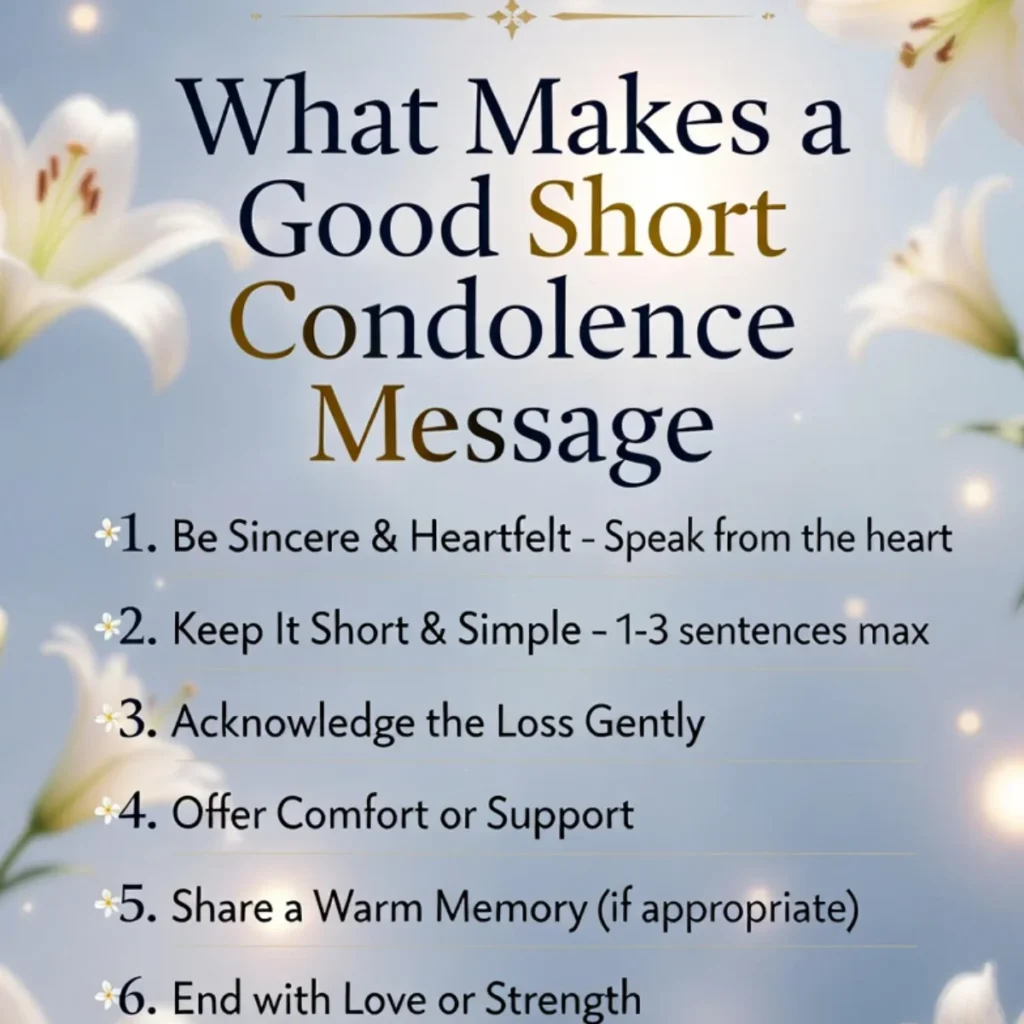
A good short condolence message includes three key elements :
Acknowledgment: Gently recognize the loss and share your feelings.
Personal Connection: Use the deceased’s name if you know it, and share how you knew them.
Offer of Support: Let them know you are there for them, even if you are not sure what to say.
Short condolence messages are perfect for texts, social media posts, sympathy cards, or quick notes when you want to express sympathy concisely . They convey compassion and support without overwhelming the recipient.
Simple Short Condolence Messages
- “I’m so sorry for your loss.”
- “My heart goes out to you and your family.”
- “Sending you love and strength during this difficult time.”
- “You’re in my thoughts and prayers.”
- “Wishing you peace and comfort.”
- “I’m here for you, always.”
- “My deepest condolences.”
- “Holding you close in my thoughts.”
- “Thinking of you and sending my love.”
- “Please know that I am with you.”
These short condolence messages are perfect for when you want to express sympathy but are not sure what else to say. They are simple yet powerful, and they let the person know you are thinking of them .
Short Condolence Messages for a Card
- “With deepest sympathy for your loss.”
- “My heart aches for you. Please accept my deepest sympathies.”
- “Sending healing thoughts your way.”
- “With heartfelt condolences and love.”
- “Sharing in your sorrow. You’re in my prayers.”
- “May memories bring you comfort.”
- “Celebrating the life of a wonderful person and mourning their passing with you.”
- “Gone from sight, but never from our hearts.”
- “Wishing you moments of peace as you cherish their memory.”
- “With love and remembrance, we share in your sorrow.”
Short Condolence Messages for Text
- “I’m so sorry for your loss. Thinking of you.”
- “My heart goes out to you today.”
- “Sending you love during this difficult time.”
- “I’m here for you—no matter what you need.”
- “Please know I’m holding you in my heart.”
- “I’m just a text away if you want to talk.”
- “Wishing you peace and comfort right now.”
- “May memories bring you some warmth today.”
- “My thoughts are with you and your family.”
- “You’re not alone in this.”
Short condolence messages for text should be gentle, respectful, and feel natural . They are perfect for when you want to say something meaningful but don’t want to overwhelm the grieving person.
Short Condolence Messages for Social Media
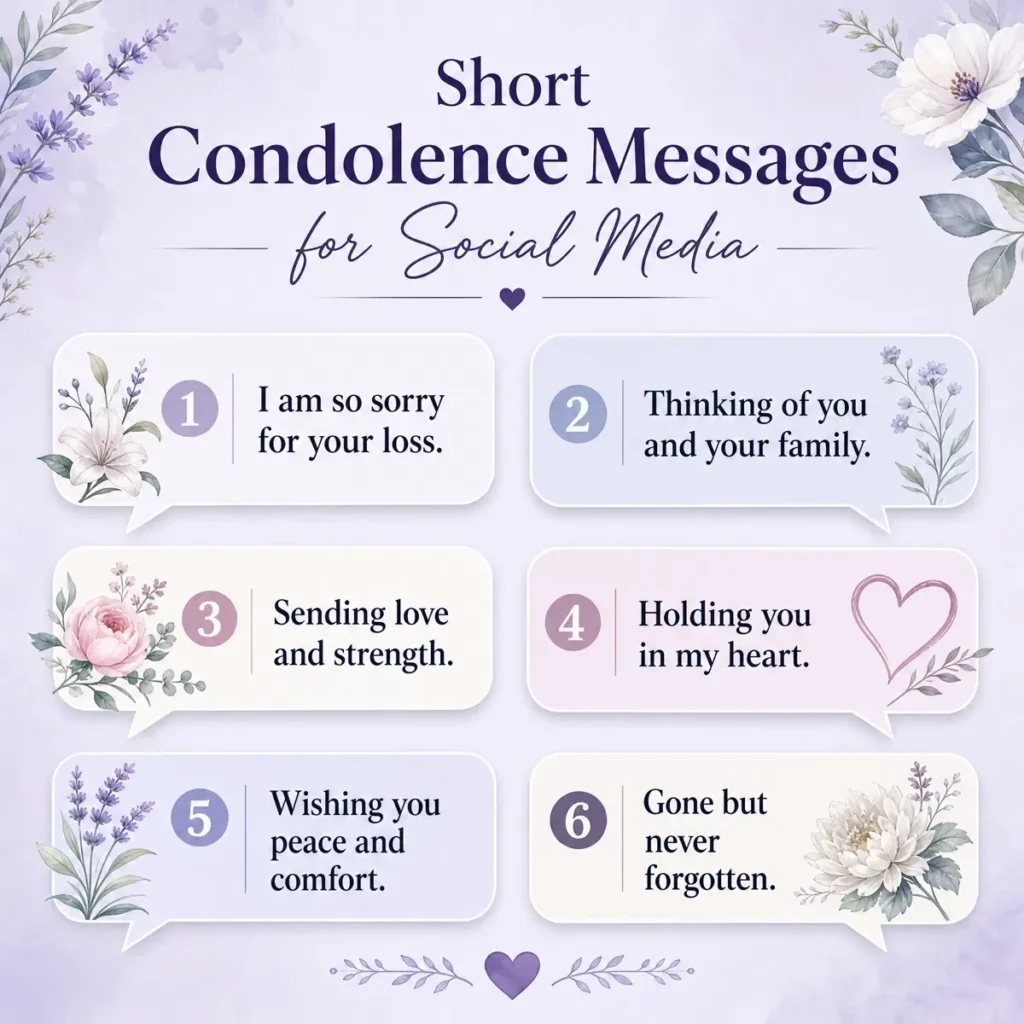
- “My deepest sympathies for your loss. Thinking of you and your family.”
- “Sending love and strength to you during this difficult time.”
- “Heartbroken for you. Please know I’m here if you need anything.”
- “You are in my thoughts and prayers. So sorry for your loss.”
- “A beautiful life well lived. They will never be forgotten.”
- “May happy memories bring you comfort. My condolences.”
- “From across the miles, we send our heartfelt sympathy.”
- “Sending you strength today and peace in all the days ahead.”
When posting on social media, keep your short condolence message brief and kind. Avoid sharing details about the death unless the family has shared them first .
Short Condolence Messages for Loss of a Parent
- “I’m so sorry for the loss of your beloved parent.”
- “Your parent was a truly special person.”
- “Sending love as you grieve the loss of your parent.”
- “I didn’t have the pleasure of knowing your parent, but they raised an amazing human being: you.”
- “Their love and wisdom will never be forgotten.”
- “What an amazing person and what a remarkable life.”
- “Your parent was loved so deeply, and so we will grieve deeply too.”
- “May time bring healing and memories bring comfort.”
Short Condolence Messages for Loss of a Sibling
- “I’m so sorry about the loss of your brother/sister.”
- “Your sibling was a truly special person who will be deeply missed.”
- “Sending you love and strength as you grieve the loss of your sibling.”
- “May your memories of your brother/sister bring you comfort.”
- “I’m so sorry for your loss. Your sibling will always be remembered.”
Short Condolence Messages for Loss of a Friend
- “Your friend meant so much to so many. I’m so sorry for your loss.”
- “The world feels dimmer without them. Thinking of you.”
- “I’m so sorry. Their light will never be forgotten.”
- “Sending you love and strength. They were a beautiful soul.”
- “The memories you shared will always be a treasure. My condolences.”
Short Condolence Messages for Loss of a Child
- “I am so terribly sorry for your loss.”
- “There are no words for such an unimaginable loss.”
- “My heart aches for you and your family.”
- “Your precious child will live in our hearts forever.”
- “I’m holding you close in my thoughts.”
When writing a short condolence message for the loss of a child, use the child’s name if you know it, and avoid clichés like “Everything happens for a reason” . Simple and honest messages are often best .
Short Religious Condolence Messages
- “May God bless you and keep you in His care.”
- “In God’s arms may you gently rest.”
- “Heaven has gained another angel.”
- “You are in my thoughts and prayers.”
- “During this time of grief, may your faith bring you comfort.”
- “Praying for peace and comfort for you and your family.”
Only include faith or spiritual language in your short condolence message if you are sure it fits the family and your relationship with them .
What to Avoid in a Short Condolence Message
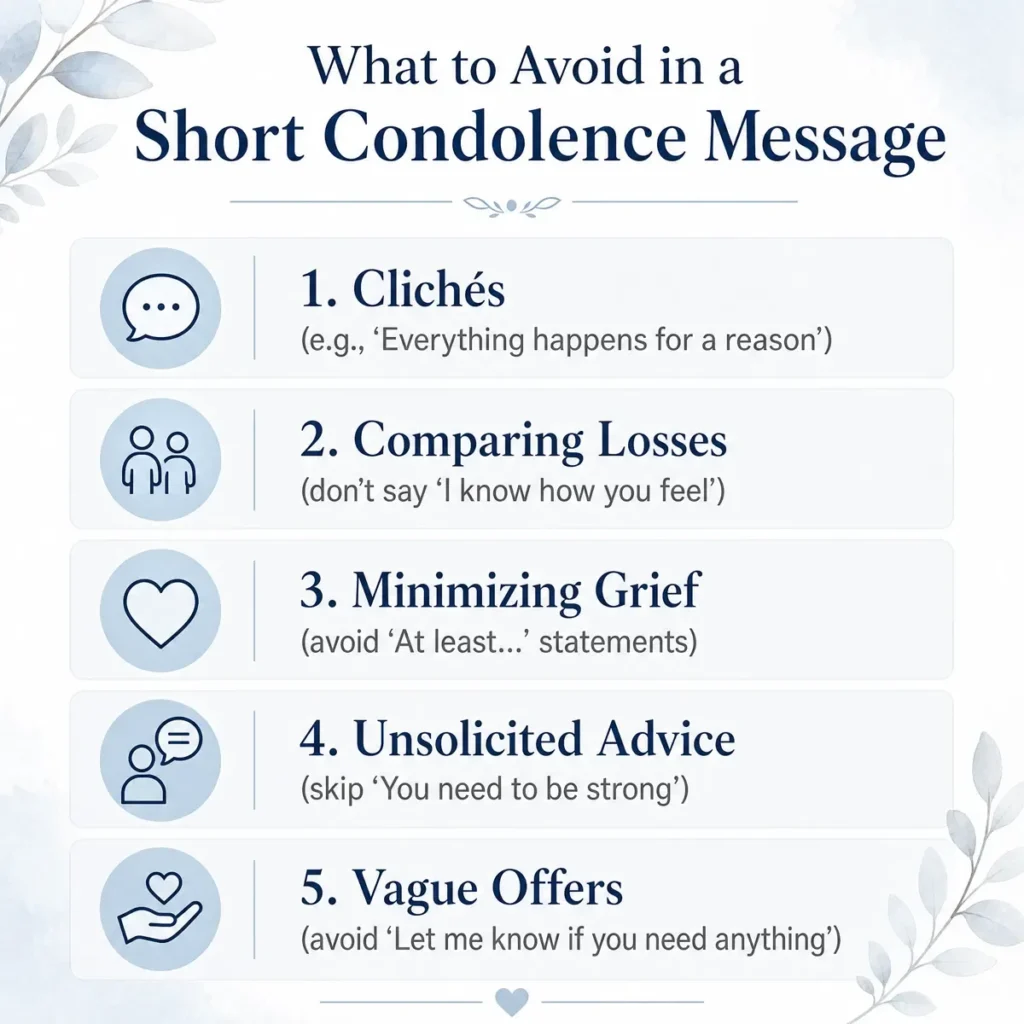
Knowing what not to say is just as important as knowing what to say. Avoid these common mistakes in your short condolence message :
- “Everything happens for a reason”
- “They’re in a better place”
- “At least you have other children”
- “I know exactly how you feel”
- “You will get over it eventually”
- “It is all for the best”
- “At least they lived a long life”
Instead say: “I’m so sorry for your loss,” “I’m here for you,” “Your loved one will be remembered,” or “I can’t imagine what you’re going through” .
Simple and honest messages are often best. Grief is not something to be fixed or explained away .
Tips for Writing a Short Condolence Message
Keep It Simple
Short, sincere messages are often best . You do not need perfect words. A brief, heartfelt message can mean a lot .
Use Their Name
If you know the name of the person who died, use it. It shows you see them as an individual and honor their memory .
Share a Memory
If you knew the deceased, include a brief, specific, and positive memory. For example, “I’ll never forget how [deceased name] always made everyone laugh at family gatherings.”
Be Honest
Say something you actually mean, not something that sounds like what you are supposed to say. Sincerity matters more than eloquence.
Offer Specific Help
Instead of saying “Let me know if you need anything,” make a concrete offer. For example, “Can I bring dinner over tomorrow?” or “I am free to help with the kids this weekend.”
Frequently Asked Questions About Short Condolence Messages
What is a short condolence message?
A short condolence message is a brief expression of sympathy sent to someone who has experienced a loss. It acknowledges the pain of their loss, offers comfort, and lets them know they are not alone.
How do I write a short condolence message?
Keep it simple and sincere. Acknowledge the loss directly, express your sympathy, and offer support. For example: “I’m so sorry for your loss. You’re in my thoughts.”
What should I say in a short condolence message?
Say something sincere like “I am so sorry for your loss,” acknowledge the deceased by name, and offer support. Keep it brief and heartfelt.
What should I not say in a short condolence message?
Avoid clichés like “Everything happens for a reason,” “They are in a better place,” or “I know exactly how you feel.” These can minimize the grieving person’s pain.
Can I send a short condolence message by text?
Yes, especially if you are unable to phone or visit in person, or you do not know the person well but want to extend respect. Just be mindful of the tone and keep it sincere.
Is it okay to send a short condolence message on social media?
Yes, but keep your message brief and kind. Avoid sharing details about the death unless the family has shared them first.
How do I end a short condolence message?
End with a warm closing such as “My heart goes out to you,” “Sending you love and strength,” or “I am here for you always.”
What if I didn’t know the deceased well?
You can still express sincere sympathy and support. A simple message like “Thinking of you during this difficult time” is always appropriate.
Conclusion
Writing a short condolence message is an act of kindness that can provide real comfort to someone who is grieving. The words you choose do not need to be elaborate or perfect—they just need to come from a place of genuine care. A short, heartfelt message that acknowledges the loss and offers support can make a grieving person feel seen, loved, and less alone.
Remember that your short condolence message is a companion to your presence and support. Your gesture, no matter how small, is a powerful way to show someone that they are not alone in their grief. As you craft your message, focus on sincerity, simplicity, and offering support. Your words may become a cherished keepsake that the grieving person revisits on difficult days.

Amelia Brooks is a passionate writer specializing in text meanings, slang, and digital communication trends. She simplifies modern messaging to help readers understand every text with ease.