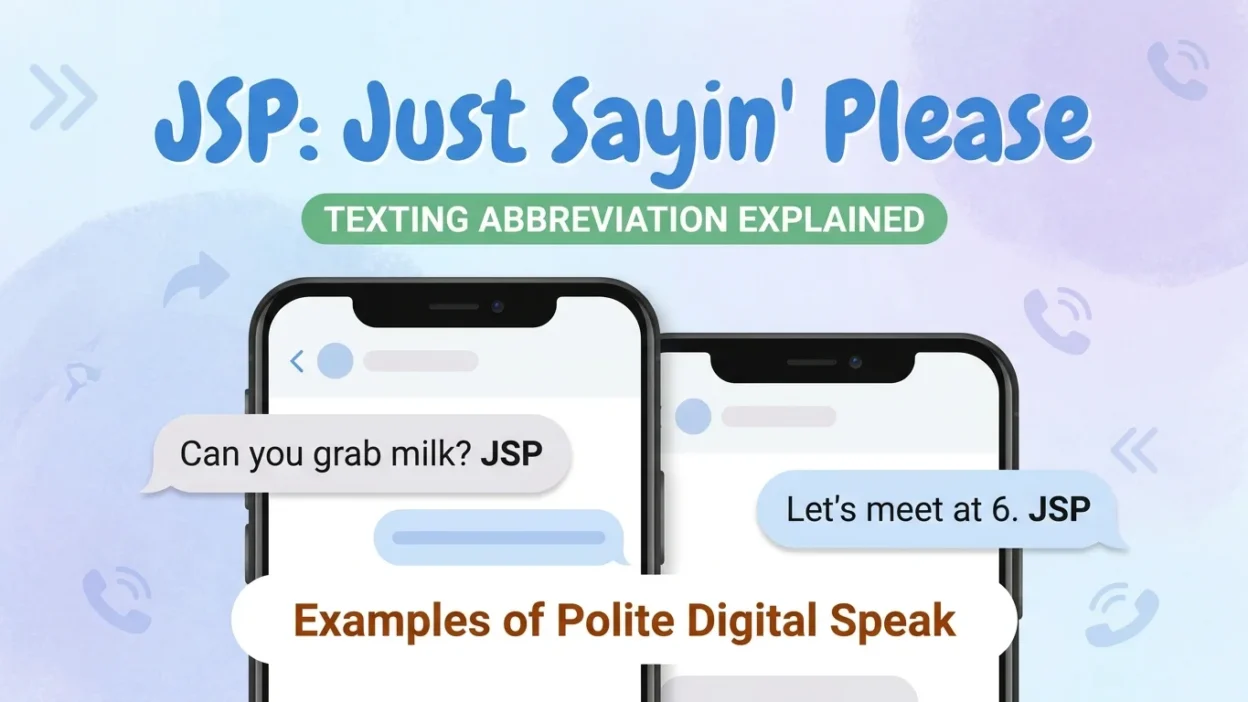
If you’ve come across “JSP” in a text or social media post and found yourself scratching your head, you’re certainly not alone. This short acronym has been popping up more frequently in online conversations, leaving many people confused about its intended meaning. The truth is, the meaning isn’t always obvious, and the situation matters enormously. In the world of digital communication, a single abbreviation like JSP can often have several distinct definitions depending on the platform, the relationship between the speakers, and the overall tone of the conversation. This comprehensive guide breaks down the different meanings of JSP, explains exactly how it’s used in texting, highlights its other common interpretations, and provides practical examples to help you navigate any conversation with confidence.
JSP Mean in Texting and on Snapchat?
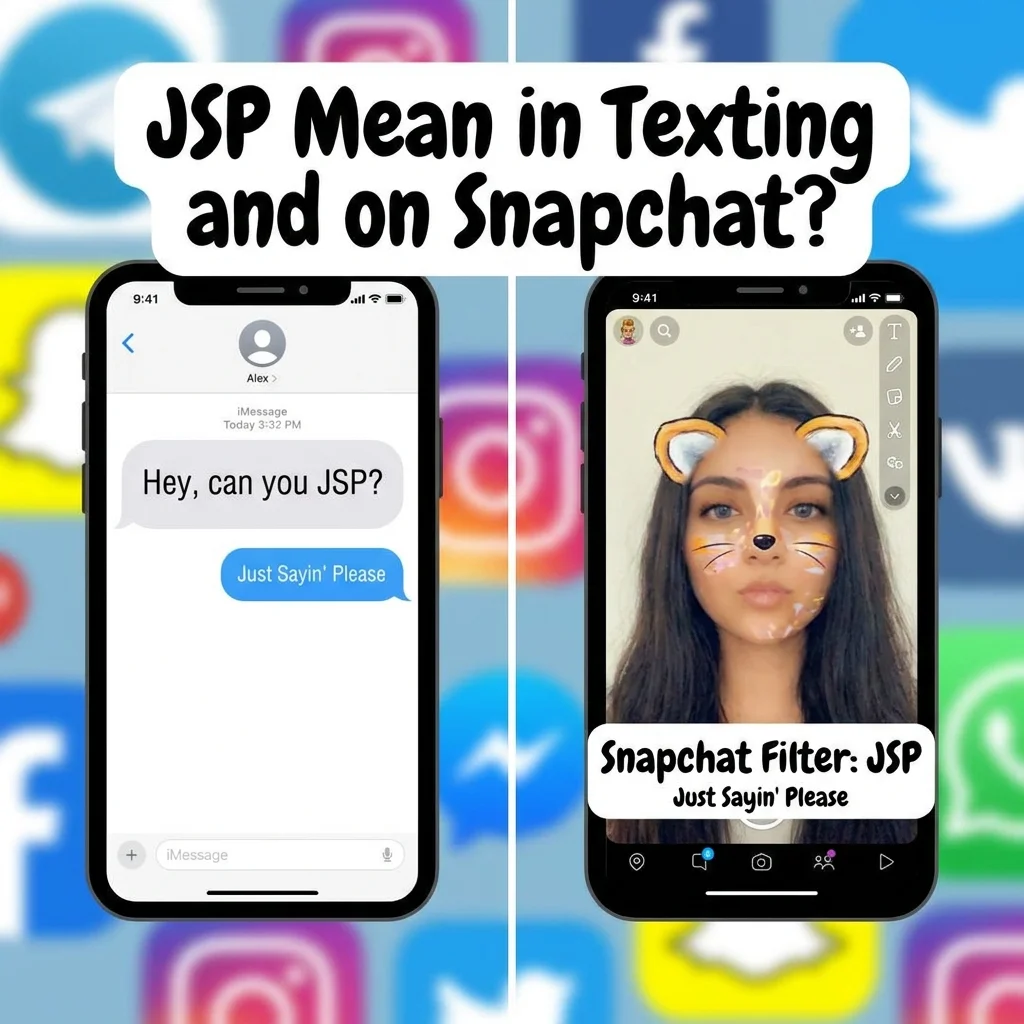
In the world of texting, Snapchat, Instagram, and other social media platforms, JSP is an internet slang abbreviation that has gained significant traction among younger users. There are a few common definitions, but one meaning has become particularly popular recently: “Just Playing.” This interpretation is especially prevalent on Snapchat, where users frequently employ abbreviations to keep messages quick, casual, and fun.
On platforms like Snapchat, JSP serves as a versatile term used to indicate that a previous message was a joke, tease, or sarcastic remark and was not meant to be taken seriously. The abbreviation acts as a social signal that prevents misunderstandings and hurt feelings. When someone sends a playful insult or an exaggerated claim, adding JSP at the end clarifies their true intent.
For example, if a friend sends a message like “You are terrible at this game, JSP,” the abbreviation immediately clarifies that the comment is all in good fun. The sender is signaling they are “just playing” and don’t intend to be hurtful or offensive. Similarly, someone might make an exaggerated boast such as “I’m the best driver ever, JSP,” using the acronym to show they’re not being entirely serious and are simply joking around with their friends.
Another common definition for JSP in casual messaging is “Just Saying, Period.” This version is often used to state a final opinion with confidence and signal the end of a debate. Think of it as a more definitive version of “just saying.” The speaker is offering their view and indicating they don’t want to continue discussing it further. It carries a tone of finality that can be useful when you want to express your thoughts without inviting further argument.
How People Use JSP in Everyday Conversations
Understanding how to use JSP effectively in your daily conversations can help you communicate more clearly and avoid misunderstandings. The abbreviation is incredibly versatile, but its meaning shifts based on how and where you use it.
JSP as a Teasing Tool
One of the most common uses of JSP is to soften teasing or playful insults among friends. When you’re joking around with someone, it’s not always obvious that you’re being sarcastic, especially through text. Adding JSP at the end of a message instantly signals that your words are not meant to be taken seriously.
Example: “You are actually the worst cook I’ve ever met, JSP”
In this case, the sender is clearly joking. The JSP turns what could be an offensive statement into a playful ribbing between friends.
JSP to End a Discussion
Another popular usage of JSP is to make a definitive statement and indicate that you’re not interested in further debate. This use of “Just Saying, Period” is particularly common in group chats where opinions might be flying back and forth.
Example: “I’m not going to the party tonight, JSP”
Here, the speaker is making their position clear and signaling that their mind is made up. The abbreviation adds a layer of finality that simple text might lack.
JSP to Soften a Blunt Opinion
Sometimes, people use JSP to offer an honest opinion that might be perceived as harsh or critical. By adding JSP, the speaker softens the blow and indicates they’re just sharing their thoughts without intending to hurt anyone’s feelings.
Example: “That movie was way too long and boring, JSP”
In this scenario, the speaker is expressing a negative opinion but is doing so casually, indicating that this is just their personal view and they’re not trying to start an argument.
A Quick Overview of JSP in Texting
Possible MeaningTypical UseExampleJust PlayingTo show a previous message was a joke or tease.”You’re the worst, JSP!”Just Saying, PeriodTo make a final, firm statement without inviting debate.”I’m not going, JSP.”Just Saying, BroTo soften a blunt opinion in a casual, friendly way.”That movie was too long, JSP.”
When to Avoid Using JSP
While JSP is handy and convenient in casual chats, it can feel entirely out of place in formal or professional settings. Using internet slang in the wrong context can make you appear unprofessional, immature, or simply out of touch. It’s important to recognize when to avoid using JSP altogether.
Professional Work Emails
In a professional environment, clarity and formality are paramount. Abbreviations like JSP have no place in business correspondence. Instead of using slang, take the time to write complete sentences that clearly convey your meaning. For example, rather than saying “I can’t make the meeting, JSP,” you should write “I am unable to attend the meeting due to a prior commitment.”
Formal Letters or Official Documents
Never use JSP or similar abbreviations in formal letters, contracts, legal documents, or any other official communication. These contexts demand precision, clarity, and a professional tone. Using slang undermines your credibility and can lead to misunderstandings.
Academic Writing
Teachers, professors, and academic institutions expect formal, well-structured writing. Using abbreviations like JSP in essays, research papers, or assignments will likely result in a lower grade. Always use proper language in academic contexts.
Conversations With Acquaintances
If you don’t know someone well, it’s wise to err on the side of formality. Using internet slang with someone you’ve just met can come across as overly familiar or unprofessional. Stick to clear, complete language until you understand the other person’s communication style.
What Does JSP Mean in Tech? The Java Server Pages Definition
In a completely different and more technical context, JSP stands for Jakarta Server Pages (formerly known as Java Server Pages). This is a powerful technology used by web developers to create dynamic, data-driven web pages. It allows developers to embed Java code directly into an HTML page, creating a seamless mix of static content and dynamic behavior.
A JSP page can be thought of as “Java inside HTML.” It’s a complimentary technology to Java Servlets, which is often described as “HTML inside Java.” JSP simplifies the process of creating and maintaining interactive web pages that can pull information from a database, respond to user input, or display personalized content. When a user requests a JSP file, the web server translates the file into a Java servlet, compiles it, and then runs it to generate the final HTML page sent to the user’s browser.
How JSP Technology Works
Understanding the technical side of JSP requires a basic grasp of how web servers operate. When a web server receives a request for a JSP page, it performs several steps. First, it converts the JSP file into a Java servlet. Then, it compiles that servlet into a class file. Finally, it executes the class file to produce the HTML output that is returned to the user’s browser. This process happens behind the scenes, making JSP an efficient and powerful tool for developers.
JSP vs. Other Web Technologies
For developers, understanding the distinction between JSP and other technologies like PHP, ASP.NET, or JavaScript frameworks is essential. Each technology has its strengths and weaknesses. JSP is particularly well-suited for enterprise-level applications that require robust, scalable, and secure solutions. Its integration with Java’s extensive ecosystem makes it a popular choice for large organizations.
Common Technical JSP Meanings
MeaningContextExplanationJakarta/Java Server PagesWeb DevelopmentA technology for creating dynamic web content with Java.Java Servlet PagesWeb DevelopmentAnother term for the same technology.Jackson Structured ProgrammingProgrammingA method for structuring COBOL programs.
JSP as “Je Sais Pas”: The French Connection

Another common use of “jsp” comes from the French language, where it is frequently used as an abbreviation for “Je Sais Pas,” which translates to “I don’t know” in English. This usage is particularly common in casual French texting and online conversations, much like how English speakers might use “idk.”
The abbreviation carries a laid-back, informal tone and conveys that the speaker is relaxed about not having an answer. It’s a quick, efficient way to respond when someone asks a question you can’t answer, and you want to keep the conversation flowing without making a big deal about it.
Example: “Tu viens ce soir?” (Are you coming tonight?) Response: “Jsp encore” (I don’t know yet)
Other Lesser-Known Meanings for JSP
Beyond the dominant texting and tech meanings, JSP can stand for various other things, depending entirely on the context. If you encounter the acronym in a specialized field or industry, it might have a very specific definition that differs from the casual interpretations.
Japanese Society of Pathology
In medical and academic circles, might refer to the Japanese Society of Pathology, a professional organization dedicated to the study and advancement of pathology in Japan.
Job Shop Scheduling Problem
In operations research and manufacturing, JSP stands for the Job Shop Scheduling Problem, a classic optimization challenge that involves scheduling jobs on multiple machines to minimize production time or cost.
Jacketed Soft Point
In the firearms and ammunition industry, JSP can refer to a Jacketed Soft Point bullet, a type of projectile commonly used for hunting.
Joint Services Publication
Within the UK Ministry of Defence, stands for Joint Services Publication, a series of official documents that provide guidance and policy for the armed forces.
The Evolution of Internet Slang
Understanding also means understanding the broader context of internet slang. Digital communication has evolved rapidly, and abbreviations like are a natural byproduct of our fast-paced, text-based world. People often seek shortcuts to express themselves quickly, and acronyms provide an efficient way to convey complex ideas or emotions in just a few characters.
Why People Use Abbreviations Like
There are several reasons why abbreviations like have become so popular:
- Speed: Typing out full sentences takes time. In fast-paced conversations, especially on platforms like Snapchat or Twitter, brevity is valued.
- Informality: Slang creates a casual, friendly tone that helps build rapport between friends.
- Social Signals: Using the right slang signals that you belong to a particular group or generation.
- Playfulness: Abbreviations can add a playful, lighthearted tone to conversations.
Cultural and Generational Differences in Using JSP
It’s worth noting that internet slang like JSP often varies across cultures and generations. Younger people, particularly those in their teens and twenties, are more likely to use and understand abbreviations like JSP. Older generations might find these acronyms confusing or might interpret them differently.
Generational Gaps
For example, a teenager might use JSP casually in a group chat without thinking twice, while their parent or grandparent might have no idea what it means. This generational gap can sometimes lead to amusing misunderstandings. Being aware of these differences can help you communicate more effectively with people of different ages.
Regional Variations
Similarly, regional variations exist. In French-speaking countries, JSP is far more likely to mean “Je Sais Pas” than “Just Playing.” If you’re communicating with someone from France, Belgium, or parts of Canada, it’s wise to consider the cultural context before assuming the meaning.
Frequently Asked Questions About JSP Meaning
What does mean on Snapchat?
On Snapchat, most commonly means “Just Playing.” It is used to indicate that a previous message was a joke or tease and shouldn’t be taken seriously. It’s a playful way to keep conversations lighthearted and fun.
What does mean in text messaging?
In a text message, can mean a few things. Most commonly, it means “Just Playing” or “Just Saying, Period.” It can also mean “Just Saying, Bro.” The exact meaning depends on the context and the relationship between the people chatting.
What does mean in web development?
In web development, stands for Jakarta Server Pages (formerly Java Server Pages). It is a server-side technology used to create dynamic web pages with Java. It is widely used in enterprise-level applications.
Is the same as “JS”?
Not exactly. “JS” is more commonly known to mean “Just Saying.”is a variation that adds a bit more definition. It can mean “Just Saying, Period” or “Just Saying, Bro,” signaling a final opinion or a casual, buddy-like tone. On Snapchat, however, it means “Just Playing,” which is distinct from “JS.”
What does jsp mean in French?
In French, is a text abbreviation for “Je Sais Pas,” which translates to “I don’t know.” It is used frequently in casual French texting and online communication.
Can be used in professional communication?
Generally, no. is considered informal internet slang and is not appropriate for professional communication like work emails, formal letters, or academic writing. In these contexts, it’s best to use complete sentences.
How can I tell which meaning of someone is using?
The best way to determine the meaning of is to look at the context. Consider the platform you’re on, the relationship you have with the other person, and the overall tone of the conversation. If you’re unsure, it’s always okay to ask for clarification.
Conclusion: Understanding JSP in Context
The meaning of is highly dependent on the context of the conversation. If you see it in a casual text or social media post, it is almost certainly a piece of internet slang meaning “Just Playing,” “Just Saying, Period,” or “Just Saying, Bro.” However, if you encounter it in a technical forum or conversation about web development, it likely refers to “Jakarta Server Pages.” If you’re chatting with someone who speaks French, it could easily mean “Je Sais Pas.” By considering the platform and the people you are talking to, you can correctly interpret what the sender means and respond appropriately. The key takeaway is that context is everything when it comes to understanding modern digital communication.

Amelia Brooks is a passionate writer specializing in text meanings, slang, and digital communication trends. She simplifies modern messaging to help readers understand every text with ease.