When someone you care about is feeling under the weather, finding the perfect words to comfort them can feel surprisingly difficult. You want to offer support and encouragement, but you also don’t want to sound generic or say the wrong thing. “Get well soon” is the classic go-to phrase, but is it always the right choice? And what are the best ways to say it?
This guide explores the meaning, usage, and nuances of “get well soon” messages. We’ll cover everything from crafting the perfect message for different situations to understanding what to avoid, ensuring your words provide genuine comfort and support .
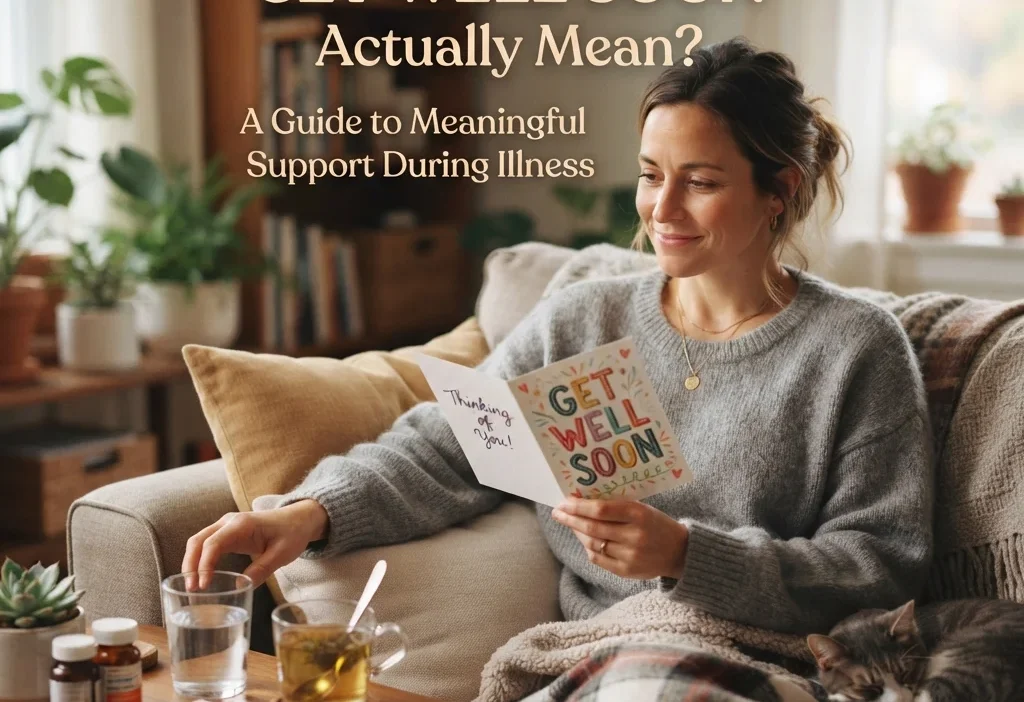
What Does “Get Well Soon” Actually Mean?

At its core, “get well soon” is a simple, kind-hearted expression. It combines a wish for a return to health with a hope that this recovery happens quickly. It is a standard and grammatically correct phrase used to convey empathy and goodwill to someone suffering from an illness, injury, or who is recovering from a medical procedure .
Its power lies in its directness and sincerity. It communicates, “I am thinking of you and I hope you are back to your usual self as soon as possible.” As a versatile phrase, it works well in a text, a card, a social media post, or a spoken message .
While its meaning is widely understood, the key to an impactful message often lies in how you personalize it beyond those three words.
When to Use a “Get Well Soon” Message
The beauty of “get well soon” is its broad applicability. It is appropriate for a wide range of situations, making it a valuable phrase to have at your disposal.
- Minor Illnesses: It’s perfect for a friend or colleague who is home with a bad cold or flu. It acknowledges their situation without making it sound like a major crisis.
- Major Health Events: For more serious situations, “get well soon” can be a central part of a message that also offers deeper support. It’s a hopeful sentiment, looking forward to better days ahead .
- Post-Surgery: After someone has undergone a procedure, a “get well soon” message is a standard and welcome gesture that shows you are thinking of them during their recovery .
- Acknowledging a Tough Time: Even if someone is dealing with a long-term condition, an occasional “thinking of you and hoping you get well soon” message can be a welcome reminder of support.
When “Get Well Soon” Might Not Be the Best Choice
While it is a standard expression, the phrase “get well soon” can feel a little too simple in certain contexts. Understanding when it might fall short is key to delivering a more thoughtful message.
For Chronic or Terminal Conditions
For someone with a chronic illness, a straightforward “get well soon” can be unintentionally tone-deaf. For them, the condition is a part of daily life, and a “cure” may not be on the cards. The phrase might highlight the permanence of their situation in a way that feels discouraging. Similarly, for someone in palliative care, it’s better to focus on comfort, peace, and the present moment. Alternative messages like “You are in my thoughts” or “I’m here for you” are more appropriate.
When “Soon” Seems Like a Distant Hope
If a recovery is expected to be long, difficult, or uncertain, promising it will happen “soon” can feel dismissive of their struggle. In these cases, your message should acknowledge the difficulty of the journey. Instead of focusing on speed, emphasize strength, resilience, and your unwavering support.
How to Reframe Your Message
If you feel that “get well soon” isn’t quite right, you can adjust your message to be more sensitive. Here are a few ways to offer support without focusing on the speed of recovery:
- “I’m thinking of you and sending you strength.”
- “Please don’t hesitate to ask if there’s anything I can do for you.”
- “I’m just a text or call away if you need someone to talk to.”
These messages shift the focus from a physical cure to emotional and practical support, which can be far more meaningful.
Writing Get Well Soon Messages: A Relationship Guide
A “get well soon” message can look vastly different depending on who you are sending it to. Tailoring your approach to the relationship will ensure your message is both appropriate and deeply appreciated .
For Friends and Close Family
With those closest to you, you can afford to be more personal, emotional, and even humorous. The goal is to remind them of your bond and reassure them of your support.
- Heartfelt: You can express your worry and care openly. For example, “I’m really sorry you’re feeling so rough. I wish I could take it off your plate and carry it for you. Since I can’t, I’m staying close and checking in” .
- Encouraging: Highlight their strength. “You may feel sick and weak right now, but to me, you are the strongest person I know, and I know you will bounce back very soon” .
- Supportive: Be direct in your offer of help. “If you need a ride, a meal, or someone to handle a small errand, tell me. I’m happy to help in real ways” .
- Funny: Use humor if it’s a natural part of your relationship. “I’m sending you healing vibes and permission to ignore everyone except your pillow” or “Get well soon. I miss you. Also, I’m bored without your chaos” .
For Colleagues or Professional Contacts
A message in a professional context should maintain a balance of kindness, respect, and consideration. It’s important to show you care while acknowledging the work environment.
- From the Team: A group message can be a powerful morale booster. For example, “The entire team is wishing you well. We eagerly await the day we can celebrate your recovery together” .
- Professional and Reassuring: It helps to ease any concerns they may have about work. “No need to worry about your workload here. We’re keeping it under control. Feel better soon!” .
- Personal Yet Professional: You can still be warm. “So sorry to hear you aren’t feeling well. Let us know if there’s anything we can do to help during this difficult time” .
For Someone You Don’t Know Very Well
If the recipient is an acquaintance or a friend of a friend, it’s best to keep the message simple, warm, and without inside jokes. A clean, straightforward message is often the most appropriate.
- “Wishing you a speedy recovery and brighter days ahead!” .
- “Sending positive thoughts your way for a swift recovery.”
The Art of Personalization: Going Beyond “Get Well Soon”
The most impactful get well soon messages are personalized ones. Adding a personal touch moves your message from a generic sentiment to a genuine expression of care .
- Mention Something Specific: Referencing something you appreciate about them or something you’re looking forward to doing together when they’re better adds immense value. For instance, “I can’t wait to get back to our Saturday morning coffee runs. Feel better soon!” .
- Use Their Name: Simply using their name in the greeting or sign-off can make even a short message feel more personal .
- Acknowledge Their Specific Situation: If they’re recovering from a known surgery or a specific illness, mentioning it shows you are paying attention. “Wishing you a smooth recovery after your hip replacement” is more thoughtful than a general wish .
60+ Thoughtful Get Well Soon Message Examples

Here is a diverse collection of get well soon messages to inspire you . You can use them as they are or adapt them to fit your needs.
Short & Sweet Messages
Sometimes, less is more. These concise messages are perfect for a quick text or a card from a group.
- Wishing you a swift recovery and brighter days ahead! .
- Get well soon! We’re all thinking of you.
- Sending healing vibes and a big hug your way.
- Rest up and feel better soon! .
- Hoping each new day brings you more strength. .
- Miss you! Feel better soon. .
- Wishing you comfort and a quick recovery. .
- Better days are on the way—hang in there! .
Encouraging & Uplifting Messages
For when the recipient needs a boost of positivity.
- You’re incredibly strong, and I know you’ll get through this. Keep fighting! .
- This is a temporary setback. You’ll be back on your feet before you know it! .
- Your resilience is truly inspiring. Keep up the good fight. .
- I hope each day brings you a little closer to feeling like your amazing self again. .
- You’ve got this—one day at a time! .
- May each day bring you closer to full health and happiness. .
Supportive & Empathetic Messages
These messages focus on offering help and acknowledging their struggle.
- I’m thinking of you and wishing you steady healing. .
- You don’t have to be upbeat with me. Rest, be honest about how you feel, and let people care for you. I’m one text away. .
- I’m here for you. Want me to run a quick errand so you can keep resting? .
- Please know that you’re not alone. All your friends, family, and loved ones are here for you whatever you need. .
- I’m sorry you’re dealing with this. I’m sending you love and support. .
- If you need a ride, a meal, or someone to handle a small errand, tell me. I’m happy to help in real ways. .
- I can handle a few small tasks for you so you don’t have to stress. .
Funny & Light-Hearted Messages
To bring a smile to someone’s face, especially if they have a good sense of humor.
- Get well soon. I can’t keep being nice to you for much longer! .
- Being sick is no fun, but at least you have a valid excuse to binge-watch your favourite shows. .
- If rest were a sport, you’d be going pro right now. Keep it up. .
- Heard you’re under the weather, sending you a big bear hug! .
- I’m not saying you’re dramatic, but your body is definitely asking for an intermission. Take the break. .
- Please get better soon so I don’t have to feel guilty anymore when I’m making fun of you. .
Messages for Romantic Partners
For a partner, the message should be infused with love, affection, and care .
- I miss your hugs and your smile. Feel better soon, my love. I can’t wait to see you healthy and happy again .
- You are my life. When you’re ill, my heart aches with worry. Get well soon .
- I’m sending you hot kisses to flush out that cold. Get well soon, my darling .
- When you, my love, are unwell, I shed tears inside, but my love for you forces me to smile again. Get well soon, honey .
- My life is incomplete without you! Here’s to your good health .
Common Mistakes to Avoid

Crafting a good get well message is about avoiding a few common pitfalls that can unintentionally undermine your good intentions.
The Cliché Overload
Avoid overly cheesy or impersonal phrases. A “Hang in there, it will all be over soon!” can feel trivializing. Instead, be genuine and specific to your relationship. A simple, “I’m so sorry you’re going through this” is often more powerful.
Overly Negative Language
Focus on the positive future, not the negative present. Don’t dwell on how bad they look or how awful their situation is. The message is meant to be a source of hope and comfort, not a reminder of their misery.
Making It All About You
While it’s fine to say “I miss you,” the message should ultimately be about them and their recovery. Avoid lengthy stories about your week that shift the focus away from their needs.
Being Too Vague with Offers to Help
One of the biggest mistakes is saying, “Let me know if you need anything.” It’s a kind sentiment, but it puts the onus on the sick person to think of something and reach out. A more effective approach is to offer something specific .
- Instead of: “Let me know if I can do anything.”
- Try: “I’m going to the store later, can I grab you anything?” or “I can drop off dinner for you on Wednesday—what are you in the mood for?”
This shows a genuine willingness to help and makes it easier for them to accept.
Conclusion: The Power of Your Words
A well-chosen get well soon message is a small gesture that can have a significant impact. It’s a simple yet effective way to show you care, to offer comfort, and to provide a little bit of hope during a difficult time. By tailoring your message to the recipient, being mindful of the context, and personalizing your words, you can transform a common phrase into a meaningful gift of support. So, when you hear that someone is unwell, take a moment to craft a message that truly comes from the heart—it might be exactly the medicine they need.
Frequently Asked Questions
Is it okay to say “get well soon” to someone with a terminal illness?
It’s often best to avoid it. For someone with a chronic or terminal illness, the phrase can feel insensitive or highlight the permanence of their condition. Instead, focus on messages of support, presence, and comfort, such as “I’m thinking of you,” “I’m here for you,” or “I love you.”
What are some alternatives to “get well soon”?
There are many fantastic alternatives depending on the context . For a more formal tone, you might say “Wishing you a speedy recovery.” For a supportive and empathetic friend, “I’m sorry to hear you’re unwell. I’m here if you need anything” is a great choice. Other options include “Thinking of you,” “Hope you feel better soon,” or “Sending you strength.”
How long should a get well message be?
A get well message can be as short as a single sentence or as long as a heartfelt paragraph. The ideal length depends on your relationship with the person and the medium you’re using. A short text message is fine for a casual acquaintance, while a close friend or family member might appreciate a more detailed card or email. The most important thing is that the message is sincere and personal.
What’s the best way to send a get well soon message?
The best method depends on your relationship and their situation. A phone call or visit can be wonderful for close friends and family if they’re feeling up to it. A physical card can feel more personal and thoughtful. However, for a quick and convenient check-in, a text message, email, or social media post is perfectly acceptable and often appreciated .
Should I send a “get well soon” message to someone who is in the hospital?
Yes, absolutely! People in the hospital often feel isolated and bored. A message of support can significantly brighten their day. You can tailor it to their situation: “Wishing you a smooth recovery in the hospital,” or “Just a note to say I’m thinking of you in the hospital. Hope the nurses are being kind!” If you don’t know their visitor policy, a text or card is a safe and thoughtful option.

Amelia Brooks is a passionate writer specializing in text meanings, slang, and digital communication trends. She simplifies modern messaging to help readers understand every text with ease.