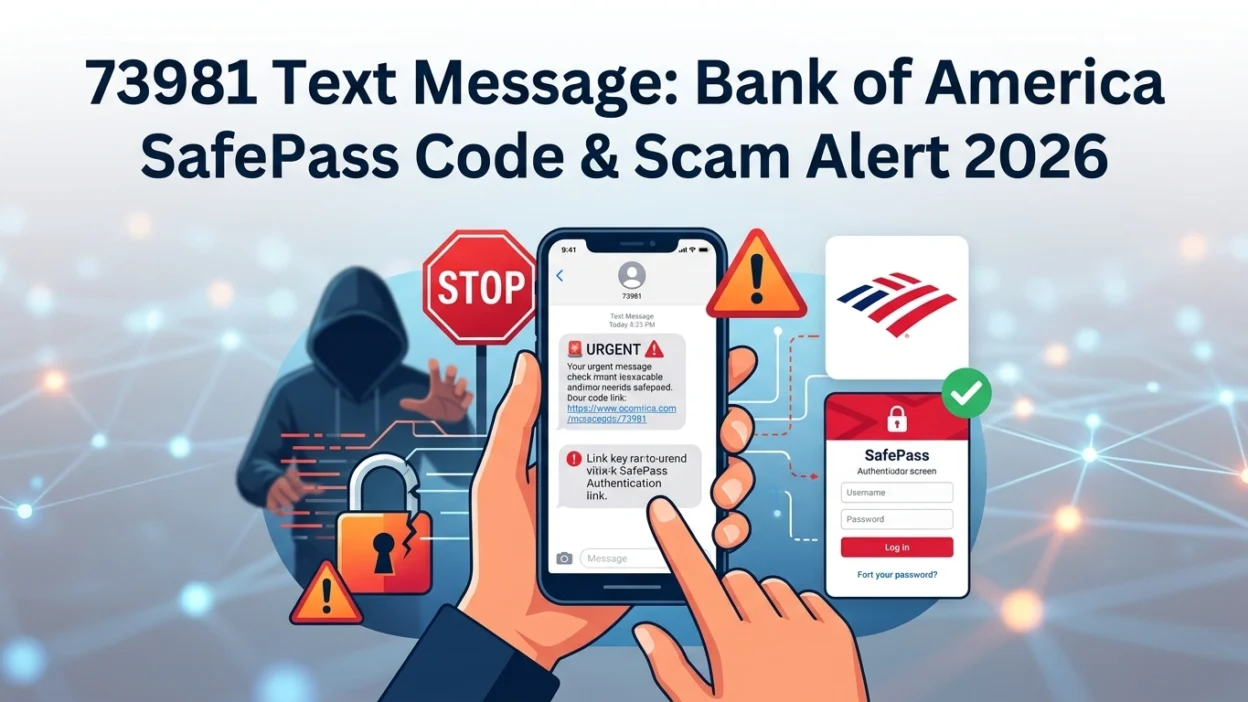
📱 You glance at your phone and see a text from an unfamiliar five-digit number: 73981. It contains a verification code, but you weren’t expecting it. Is it legitimate? Should you use the code? Or is this some type of scam?
The 73981 text message is a legitimate short code used by Bank of America for its SafePass security service. However, it is also frequently exploited by scammers who trick people into sharing these codes. This guide explains everything you need to know about the 73981 short code, its official purpose, and how to protect yourself from fraud.
📌 What Is the 73981 Short Code?
The number 73981 is a dedicated short code used by Bank of America to send one-time verification codes as part of its SafePass service . This is a form of two-factor authentication (2FA) designed to add an extra layer of security to online banking . Short codes are 5-6 digit numbers that organizations use for high-volume, automated messaging .
When you receive a 73981 text message, it is typically a security code that you requested while performing a sensitive action on your Bank of America account. The code serves as a temporary key to verify your identity.
🔐 The Legitimate Purpose: Bank of America SafePass
Bank of America uses the 73981 short code to send SafePass verification codes. These messages are transactional and essential for account security . You should only receive a 73981 text message when you initiate certain actions on your account.
When You’ll Receive a SafePass Code
Bank of America sends these codes from 73981 when you perform sensitive actions, including:
- Logging in from an unrecognized device
- Transferring funds
- Changing personal information on your account
- Resetting your password
The process is straightforward. After you trigger the action, Bank of America sends a unique, temporary code to your registered mobile number from 73981 . You then enter this code on the official Bank of America website or app to complete the action.
What the Message Typically Looks Like
A legitimate SafePass message from 73981 usually contains a numeric code and a warning. For example: “Bank of America: DO NOT share this code. We NEVER call or text for it. Code [XXXXXX]. Reply HELP if you didn’t request it” . This message clearly identifies the sender and warns against sharing the code.
⚠️ The Scam: How Fraudsters Exploit 73981
The 73981 short code is a prime target for scammers because people are accustomed to receiving legitimate security codes from it . The primary scam involves social engineering to trick you into revealing the SafePass code sent to your phone .
How the Scam Unfolds
- The Bait: You receive an unsolicited call, text, or email that appears to be from Bank of America. The message might claim there has been a fraudulent transaction on your account or that your account is locked .
- The Action: While communicating with you, the scammer goes to the real Bank of America website and initiates a password reset or transaction using stolen credentials . This action triggers a legitimate SafePass code to be sent to your phone from 73981.
- The Trap: The scammer, pretending to be a bank employee helping you, asks you to read the code back to them for “verification purposes” .
If you share this code, you give the scammer the key to your account. Consequently, they can log in, change your password, and potentially drain your funds .
🛡️ How to Protect Yourself
Distinguishing between a legitimate situation and a scam comes down to one simple rule: Did you initiate the action?
The Golden Rule: Never Share Your Code
A real Bank of America employee will never call or text you to ask for a SafePass code . These codes are for you to enter directly into the official website or app. This is the most important rule to remember .
When to Be Suspicious
- Unsolicited codes: If you receive a 73981 text message without requesting one, it’s a major red flag that someone else is trying to access your account .
- Urgent requests: Scammers create a false sense of urgency to pressure you into making mistakes .
- Requests to share the code: Anyone asking you to read a verification code is a scammer .
What to Do If You Receive an Unexpected Code
If you receive an unsolicited 73981 text message, do not reply. Instead, immediately log in to your Bank of America account by typing the website address directly into your browser . Check that your credentials are secure and consider changing your password as a precaution .
Contact the Bank Directly
If you receive a suspicious message or call, hang up and contact Bank of America using the official phone number on the back of your debit card or on their secure website . Do not use any contact information provided in the suspicious message.
📋 How to Stop Receiving 73981 Messages
If you want to stop receiving messages from 73981, you can reply with “STOP” . In the United States, it is required that “STOP,” “QUIT,” “CANCEL,” “UNSUBSCRIBE,” or “END” keywords remove users from the campaign sending them messages .
However, if you use Bank of America’s SafePass service, blocking this code could interfere with your ability to complete secure transactions. You would need to disable two-factor authentication or find an alternative verification method.
❌ Common Mistakes About 73981 Messages
Mistake 1: Assuming All 73981 Messages Are Scams
Not every 73981 text message is a scam. If you initiated a banking action, the code is legitimate . The scam only occurs when someone tricks you into sharing it.
Mistake 2: Sharing the Code with a “Helpful” Caller
Many people share codes with someone claiming to be from the bank because they want to be helpful. Never share your SafePass code with anyone, even if they seem legitimate .
Mistake 3: Ignoring Unexpected Codes
If you receive an unexpected 73981 text message, do not ignore it. It could mean someone is trying to access your account. Log in and change your password immediately .
Mistake 4: Clicking Links in Suspicious Messages
Legitimate SafePass messages from 73981 typically do not contain links. If a message asks you to click a link, it is likely a scam.
❓ Frequently Asked Questions
What is the 73981 text message?
The 73981 text message is a short code used by Bank of America to send SafePass verification codes for two-factor authentication .
Is 73981 a legitimate Bank of America code?
Yes, 73981 is the official short code Bank of America uses for its SafePass service .
Why did I get a text from 73981?
You received a text from 73981 because you initiated a banking action that requires verification, such as logging in from a new device or transferring funds .
Is 73981 a scam?
The code itself is legitimate, but scammers exploit it by tricking you into sharing the verification code they send to your phone .
Should I share my 73981 code?
No. Never share your SafePass code with anyone. Bank of America will never call or text you to ask for it .
What should I do if I get an unexpected 73981 code?
If you receive an unexpected code, log in to your Bank of America account immediately to check for unauthorized activity. Change your password as a precaution .
Can I stop receiving 73981 messages?
You can reply “STOP” to unsubscribe, but this will disable SafePass security on your account .
How do I report a 73981 scam?
If you receive a suspicious call or message, contact Bank of America directly using the official number on the back of your debit card .
✅ Conclusion
The 73981 text message is a legitimate Bank of America short code used for SafePass verification codes. These codes add a crucial layer of security to your online banking . However, scammers frequently exploit this code by tricking people into sharing the verification codes sent to their phones.
The golden rule is simple: never share your 73981 code with anyone. If you didn’t initiate the action, the message is a red flag. Log into your account directly through official channels, check for suspicious activity, and change your password if needed. By understanding the legitimate purpose of 73981 and staying vigilant against scams, you can protect your financial information and use SafePass securely.

Amelia Brooks is a passionate writer specializing in text meanings, slang, and digital communication trends. She simplifies modern messaging to help readers understand every text with ease.