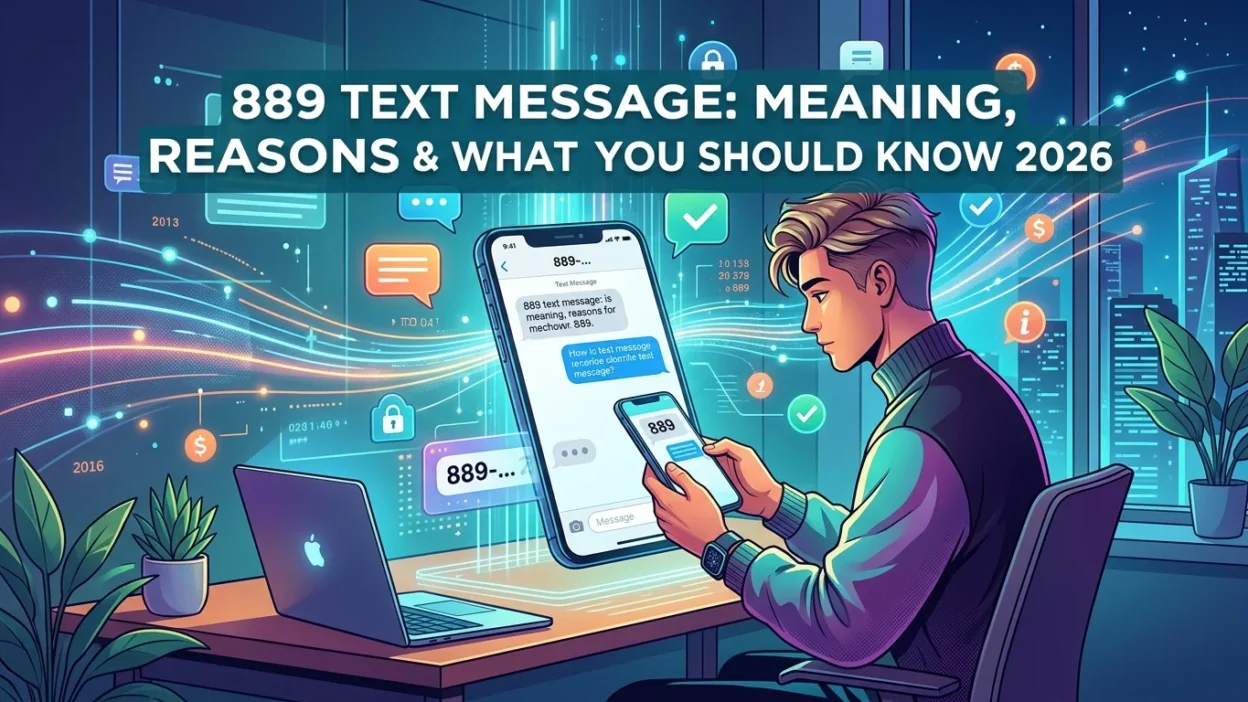
Receiving a text message from an unfamiliar number can be puzzling, especially when that number is just three digits like 889. Unlike common texting abbreviations that are clearly slang or shorthand, “889” isn’t immediately obvious in its meaning. You might wonder if it’s a legitimate message from a service you use, a potential scam, or something else entirely.
This comprehensive guide explores the various meanings behind the 889 text message, from official carrier alerts to international slang and even spiritual interpretations, helping you understand exactly what you’re dealing with and how to respond appropriately.
What Does 889 Mean in a Text Message?
When you see 889 as a sender ID in a text message, it typically functions as a short code. Short codes are specialized three-to-six digit numbers that businesses and organizations use for high-volume, automated messaging. These codes are different from regular phone numbers; they’re designed to be easier to remember and more efficient for bulk communications.
The meaning of a message from 889 depends largely on your location, your mobile carrier, and the specific content of the message itself. In the United States, this code has a very specific and official purpose. In other parts of the world, it can mean something entirely different. Understanding these distinctions is the first step in handling such messages appropriately.
Primary Use: T-Mobile Official Short Code
In the United States and Puerto Rico, the short code 889 is officially registered to T-Mobile, one of the country’s largest mobile network operators. For T-Mobile customers, messages from this code are typically legitimate and relate directly to your wireless account. This is perhaps the most common reason someone in the U.S. would receive a text from this number.
Types of Messages You Might Receive
If you’re a T-Mobile customer, texts from 889 usually fall into these categories:
Data Usage Alerts These notifications inform you that you’re approaching or have exceeded your monthly high-speed data cap or mobile hotspot limit. For example, you might receive a message saying you’ve used 75% of your high-speed data for the billing cycle. These alerts help you avoid unexpected charges or slowdowns in your service.
Account Service Notifications These messages provide information about plan changes, service maintenance in your area, or general account status updates. If T-Mobile is updating their network or making changes to your service plan, they might use 889 to keep you informed.
KickBack Notifications Some users have reported receiving messages about KickBack discounts. This was a T-Mobile feature that gave customers a credit for using less than 2GB of data in a billing cycle. The notifications from 889 would let you know whether the discount applied to your account.
Verification Codes Though less common, 889 may occasionally be used to send one-time passcodes for account login or significant account changes. This adds an extra layer of security to your T-Mobile account.
These messages are typically non-promotional and essential to account management. T-Mobile uses this short code because short codes are more secure and reliable than standard 10-digit numbers for automated alerts. They also help customers quickly recognize legitimate communications from the carrier.
What If I’m Not a T-Mobile Customer?

If you receive a text from 889 but aren’t on T-Mobile’s network, the situation is different. For example, if you use AT&T, Verizon, or another carrier and see a message from this code, the message is likely a scam or spoofed communication.
Scammers can manipulate sender IDs to make messages appear legitimate. By referencing a known short code like 889, they add false credibility to their fraudulent messages. This practice is called “spoofing,” and it’s increasingly common in the world of SMS phishing, or “smishing.”
A legitimate short code registered to T-Mobile should only be recognized by devices on T-Mobile’s network. Therefore, receiving such a message on another network is a significant red flag. In these cases, it’s best not to interact with the message at all.
International Uses of 889
Beyond its role as a T-Mobile short code in the United States, 889 carries various meanings in different countries and cultures. These international uses are fascinating and highlight how the same number sequence can have completely different interpretations depending on where you are in the world.
Japan: The “Hurry Up” Code
In Japan, 889 has a completely different meaning rooted in the country’s pager era. When read aloud, the digits correspond to the Japanese word “Hayaku” (はやく), which translates to “hurry up” or “quickly”.
This numeric code works through a system of phonetic reading. The number 8 is pronounced “hachi” (八), and the number 9 is pronounced “ku” (九). When combined as 889, the pronunciation approximates “hayaku,” the casual command meaning “do it quickly” or “hurry up.”
This usage originated during the pager era in Japan, when people needed to send short messages using only numbers. Pagers couldn’t display text, so users developed creative ways to convey meaning through numeric codes. The practice persisted and evolved, and today, younger Japanese users sometimes type 889 in messaging apps like Line as a playful shorthand to urge a faster response from friends or family members.
Interestingly, it’s often used in a lighthearted, teasing way rather than as a serious demand. For example, a friend might send 889 if you’re taking too long to reply to their message, implying they’re eagerly waiting for your response.
Vietnam: A New Mobile Prefix
In Vietnam, 889 has recently taken on a new telecommunications role. As of March 2025, Vietnam introduced a new mobile network operator using the prefix 889. This means Vietnamese mobile subscribers may see 889 as the starting digits of a phone number rather than as a short code for text messages.
This is a significant development in Vietnam’s telecommunications landscape. The introduction of new prefixes often indicates expanding competition and service options in the mobile market. For Vietnamese consumers, seeing 889 at the beginning of a phone number simply identifies the caller’s network provider, similar to how area codes work in the United States.
Ethiopia: USSD Service Code
In Ethiopia, 889 appears as part of a USSD (Unstructured Supplementary Service Data) code. Specifically, Safaricom Ethiopia customers use the code *889# to purchase airtime through the Commercial Bank of Ethiopia’s mobile banking platform.
USSD codes are different from SMS messages. They’re session-based protocols that allow users to interact with services directly from their phones, often without needing an internet connection. They’re commonly used for mobile banking, checking account balances, and purchasing services.
In this context, 889 isn’t a sender ID for text messages at all. It’s part of a functional service code that Ethiopians use for everyday banking and mobile transactions.
Slovakia: Shared-Cost Numbers
In Slovakia, the number range 889 is designated for shared-cost numbers. This is a telecommunications classification for numbers where costs are shared between the caller and the recipient. It’s similar to toll-free or premium-rate numbers in other countries.
This designation is purely administrative and has nothing to do with text messaging. It simply categorizes how calls to numbers beginning with 889 are billed.
889 as Slang in Chinese Internet Culture
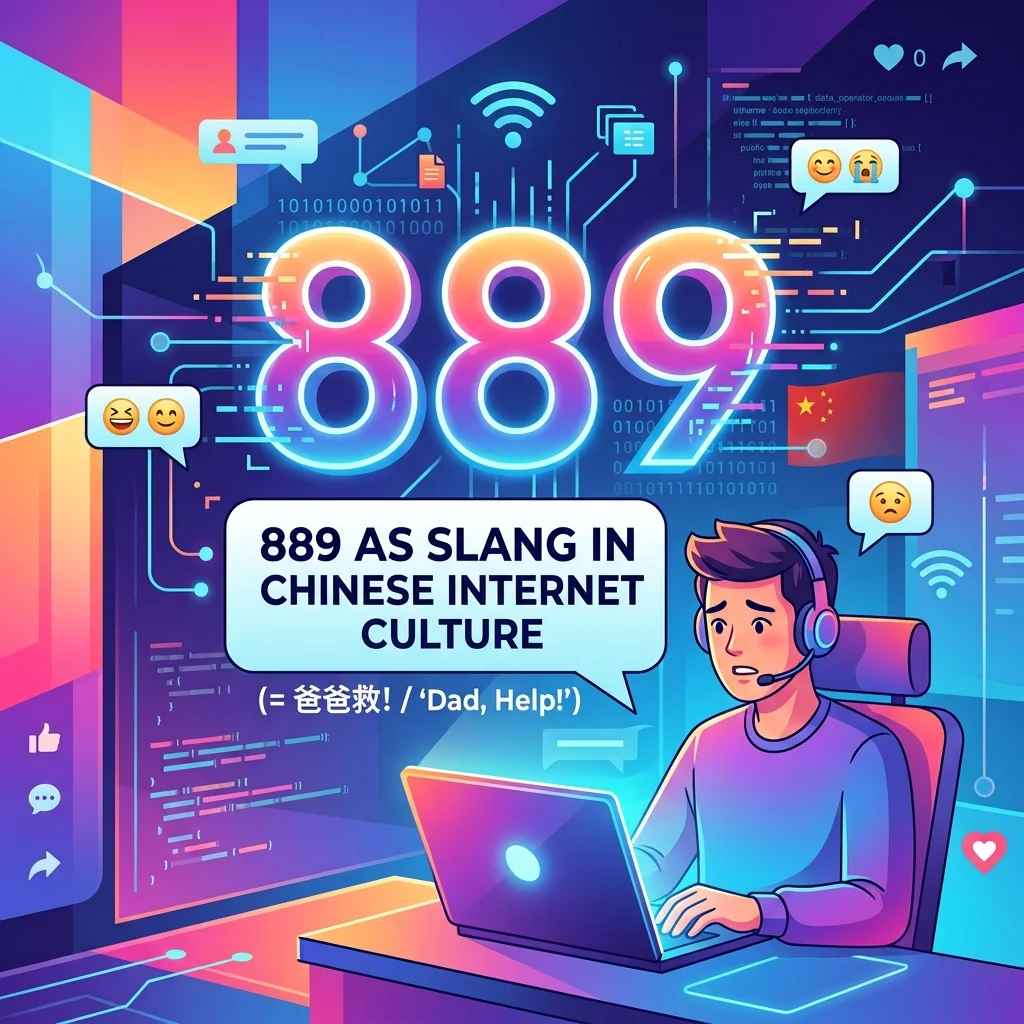
In Chinese internet culture, number combinations are often used as phonetic shorthand. For instance, 520 is widely recognized as meaning “I love you” because the numbers sound similar to the Chinese phrase for that sentiment. Similarly, 886 is known to mean “bye-bye” (bāi bāi le).
Some internet users interpret 889 as a variation meaning “bye-bye just” or as a casual farewell. However, this usage is less common and often considered a typo for 886. The two numbers are visually similar, and it’s easy to make the mistake when typing quickly.
In some regions, particularly in certain Chinese-speaking communities, local dialects have attached humorous or even mildly insulting meanings to 889 based on how the numbers sound in those dialects. These are niche usages and not widely recognized across Chinese internet culture. For most speakers, 889 doesn’t carry a standard slang meaning.
Spiritual Interpretations: Angel Number 889
Outside the realm of telecommunications and internet slang, 889 holds significance in numerology and spirituality. Many people who repeatedly encounter this number consider it an angel number—a sequence believed to carry divine guidance or messages from the universe.
Abundance and Prosperity
One common interpretation of 889 is that it signals financial security and material blessings are on the way. The number 8 in numerology is associated with abundance, success, and the law of karma. When doubled, as in 889, the emphasis on these themes is amplified.
People who follow angel number interpretations might see 889 as a reassurance that their hard work is about to pay off. It’s often interpreted as a positive sign regarding career advancement, financial investments, or business endeavors.
Personal Growth and Transformation
889 is also associated with personal development and using one’s talents to help others. The presence of the number 9 in the sequence is linked to endings, humanitarianism, and spiritual enlightenment.
The combination of 8 and 9 in 889 suggests a period of growth that’s both material and spiritual. It might be interpreted as a call to pursue your professional goals while remaining compassionate and service-oriented toward others. This balance between personal success and contribution to the greater good is a central theme in many numerological interpretations.
Professional Reflection
Some spiritualists suggest seeing 889 may indicate it’s time to reassess your career path or work-life balance. The message might be encouraging you to evaluate whether your current professional situation aligns with your values and long-term goals.
Is the 889 Text Message a Scam?
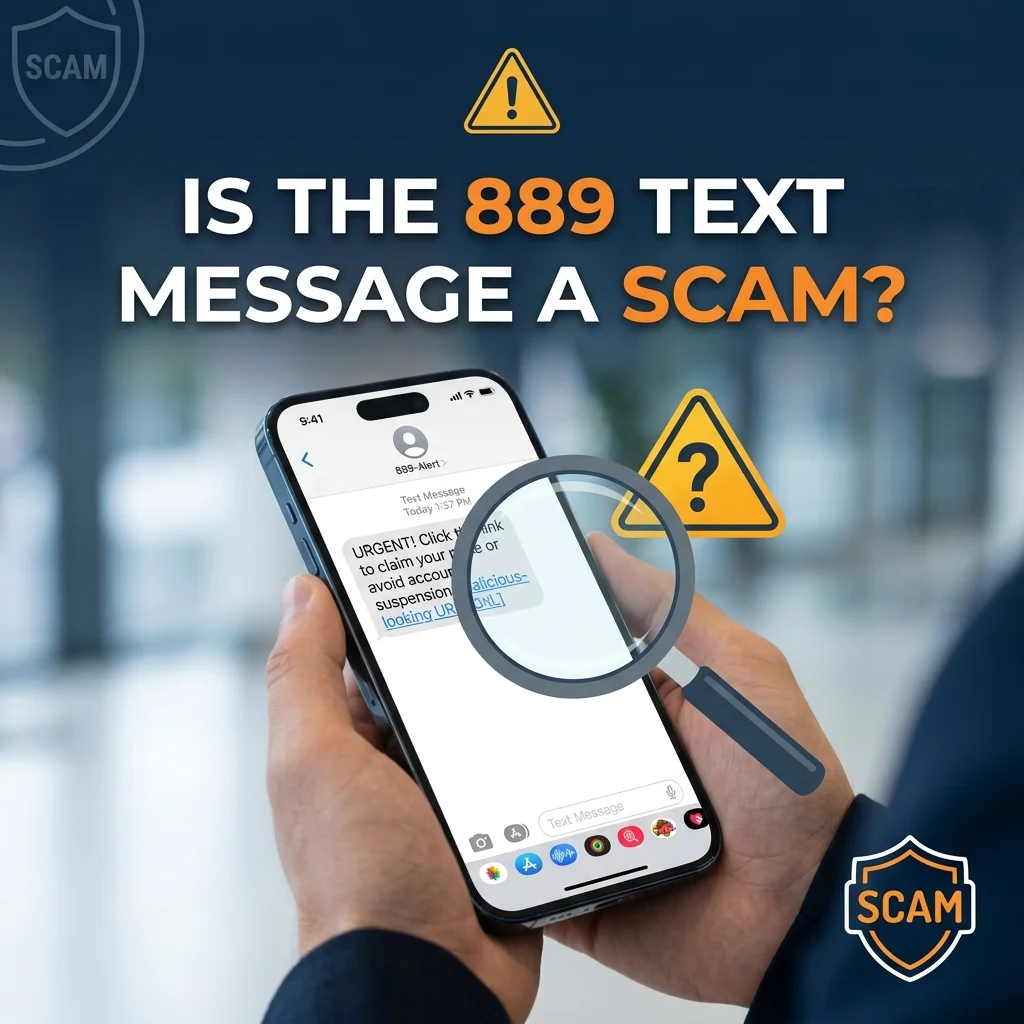
While the short code 889 itself is legitimate when used by T-Mobile, scammers can exploit its recognition to launch smishing attacks. Smishing is SMS-based phishing, where attackers send fraudulent text messages designed to trick recipients into revealing sensitive information.
Red Flags to Identify Scams
Suspicious Links Messages that urge you to click a link to “verify details” or “claim a prize” are major red flags. Legitimate T-Mobile links typically use official domains like t-mo.co. If a link looks suspicious or doesn’t match the company’s standard URL format, don’t click on it.
Requests for Sensitive Data Legitimate companies never request passwords, Social Security Numbers, or banking details through unsecured text messages. If a message from 889 asks for this type of information, it’s almost certainly a scam. Delete it immediately.
Urgent or Threatening Tone Scammers often create a sense of urgency to pressure recipients into acting without thinking. Messages that demand immediate action to prevent account suspension, claim you’ve won a prize that will expire soon, or threaten legal action are designed to exploit fear and urgency.
How to Stay Safe
Don’t click links in unsolicited messages, even if they appear legitimate. Instead, open your browser and navigate directly to the company’s official website to check your account status.
Don’t reply to suspicious messages. Even replying with “STOP” confirms your number is active and may lead to more spam in the future.
Block the number using your phone’s built-in feature. Both iPhone and Android devices allow you to block specific numbers, preventing further messages from reaching you.
Report spam by forwarding the message to 7726, which spells “SPAM” on most phones. This service is operated by mobile carriers to track and block spam messages.
Delete the message once you’ve reported it. There’s no benefit to keeping a suspicious message in your inbox.
How to Stop Messages from 889
If you’re receiving unwanted texts from 889, your options depend on the type of message you’re receiving and your relationship with T-Mobile.
For T-Mobile Customers
Since messages from 889 are often transactional rather than promotional, you may not be able to opt out of all messages. However, you can manage your preferences:
Log into your T-Mobile account via the app or website. Navigate to Account Profile or Communication Preferences. From there, adjust which alerts you wish to receive about usage, billing, or plan changes.
Transactional messages like security alerts are typically mandatory and cannot be turned off. These are essential communications that help protect your account and keep you informed about your service.
For Non-T-Mobile Customers
If you’re receiving 889 messages on another carrier, the safest approach is to block the number immediately and report the message as spam. Since you’re not a T-Mobile customer, there’s no legitimate reason for a message from this short code to reach you.
889 vs. 886: Understanding the Difference
People sometimes confuse 889 with 886, which is more commonly used in Chinese internet slang. While the numbers look similar, they mean very different things in most contexts.
886 is widely recognized in Chinese online culture as meaning “bye-bye,” derived from the pronunciation “bāi bāi le.” This usage is common in casual messaging, especially among younger internet users.
889, on the other hand, is primarily known as a T-Mobile short code in the United States and a “hurry up” code in Japan. It rarely functions as a direct farewell in any context.
The visual similarity between the two numbers can cause confusion, especially when typing quickly. Someone intending to type 886 might accidentally type 889 instead, leading to a message that doesn’t quite make sense to the recipient.
Frequently Asked Questions
Is 889 a spam text message?
889 itself is not spam when used by T-Mobile for legitimate account alerts. However, scammers can spoof this number or reference it in fraudulent messages. Always verify the content before responding and never share personal information via text.
Why did I get a text from 889?
If you’re a T-Mobile customer, the message is likely a legitimate alert about data usage, account changes, or service updates. If you’re on another network, it could be a scam or spoofed message. Check the content carefully and don’t click on any suspicious links.
What does 889 mean in Japan?
In Japan, 889 is a numeric code that reads as “hayaku,” meaning “hurry up” or “quickly.” It originated during the pager era and is still occasionally used in digital communication as a playful way to urge someone to respond faster.
Does texting “STOP” to 889 work?
For T-Mobile customers, the “STOP” command may unsubscribe you from promotional messages. However, it typically won’t stop essential transactional alerts like security or data usage notifications. These are considered necessary communications for account management.
Is 889 an angel number?
Yes, in numerology, 889 is considered an angel number associated with abundance, personal growth, and professional reflection. People who see it repeatedly often interpret it as a spiritual message encouraging them to pursue their goals while remaining compassionate toward others.
Can scammers use 889 to trick me?
Yes, scammers can spoof short codes or reference 889 to make their messages seem legitimate. Always treat unsolicited messages with caution, don’t click on links, and never share personal information via text message.
What should I do if I accidentally clicked a link from 889?
If you clicked a suspicious link from a message purporting to be from 889, change your passwords immediately. Monitor your bank accounts and credit cards for unauthorized activity. Consider running a security scan on your phone and report the incident to your mobile carrier.
Conclusion
The meaning of a 889 text message depends entirely on your context. For T-Mobile customers in the United States, it’s a legitimate short code for important account alerts about data usage, service changes, and security verifications. In Japan, it’s playful slang for “hurry up” with roots in the pager era. In Vietnam, it’s becoming a mobile network prefix, and in Ethiopia, it’s part of a USSD code for banking services.
The key takeaway is to always verify the source before taking any action. Legitimate services won’t ask for sensitive information via text, and when in doubt, it’s safest to ignore, block, and report suspicious messages. Understanding the different meanings behind 889 empowers you to respond appropriately, whether you’re checking a data alert, replying to a Japanese friend, or simply deleting a scam.

Amelia Brooks is a passionate writer specializing in text meanings, slang, and digital communication trends. She simplifies modern messaging to help readers understand every text with ease.