
There’s something special about waking up to a thoughtful message. Whether it’s from a partner, a close friend, or a family member, a well-crafted good morning message has the power to shift someone’s entire day in a positive direction. Yet many people struggle with what to say. They want to send something meaningful but often fall back on generic phrases that feel hollow or overused.
This guide is different. Rather than simply handing you a list of copy-paste templates, it explores the psychology behind why morning messages matter, provides a framework for crafting personalized greetings, and offers practical examples you can adapt to any relationship. Whether you’re looking to strengthen a romantic connection, brighten a friend’s day, or simply start a new habit of thoughtfulness, this comprehensive resource will equip you with everything you need to send a good morning message that genuinely lands.
Why Sending a Good Morning Message Matters

Before diving into specific examples, it’s worth understanding why these small gestures carry so much weight. The first moments of the day are uniquely significant. When someone wakes up, their mind is fresh, and the first inputs they receive often set the emotional tone for the hours ahead. A positive good morning message can serve as an anchor of warmth and connection in an otherwise busy or stressful day.
From a psychological perspective, morning texts tap into what researchers call “micro-connections.” These are small, consistent interactions that build trust and intimacy over time. They don’t require lengthy conversations or grand romantic gestures. Instead, they’re about showing up reliably and reminding someone they’re on your mind. Over weeks and months, this consistent presence deepens relationships in ways that occasional grand gestures simply cannot match.
There’s also a benefit for the sender. Starting your day by thinking of someone else shifts your focus outward, which can reduce anxiety and improve your own mood. It’s a practice in intentionality—a small act of kindness that benefits both parties.
Understanding Your Audience: Tailoring the Message
The most effective good morning message is one that feels specifically crafted for the recipient. Generic greetings like “Good morning, hope you have a great day” are nice, but they don’t create the same emotional impact as something personalized. Understanding who you’re messaging and what they need from you is the first step toward crafting a message that truly resonates.
For a Romantic Partner
When messaging a romantic partner, the goal is to express affection while also showing respect for their autonomy. A good morning message can be romantic and loving, but it should never feel demanding or like an obligation. The best messages in this category balance warmth with lightness. They remind your partner that they’re loved without putting pressure on them to respond or reciprocate in a certain way.
Messages for romantic partners often include words of affirmation. A simple “Thinking of you this morning” or “Can’t wait to see you later” can set a loving tone for the day. However, it’s equally effective to express support for their goals: “Big presentation today—you’ve got this” shows that you’re paying attention to their life beyond the relationship.
For a Close Friend
Friendship messages have a different flavor. They’re often more playful, casual, and rooted in shared experiences. A good morning message for a close friend might reference an inside joke, a shared memory, or simply acknowledge the ridiculousness of waking up early. The tone is typically lighthearted and honest. There’s no need for formality or poetic language—just genuine warmth.
Examples include: “Rise and shine! Ready to conquer another day of pretending to be adults?” or “Morning! Was thinking about that time we got lost trying to find coffee. Hope today has fewer detours.” These messages work because they’re specific to your relationship.
For a Family Member
Family messages often carry a tone of warmth combined with practicality. They show care without being intrusive. This might mean checking in on a sibling who’s going through a tough time, sending encouragement to a parent with a busy day, or simply letting a grandchild know you’re thinking of them. The key is to strike a balance between affection and respect for their personal space.
For Someone You’re Just Getting to Know
In early stages of dating or friendship, morning messages require a lighter touch. A message can feel like a significant step, so it’s wise to avoid anything too intense or romantic. Simple, genuine greetings work best. A quick “Hope you’re having a good morning” or a message reacting to something they mentioned in a previous conversation feels thoughtful without being overwhelming. Pay attention to whether they initiate messages as well, and match their energy.
The Psychology of Morning Communication
Why do morning messages have such an impact? The answer lies in several psychological principles that make this particular form of communication uniquely powerful.
The Primacy Effect suggests that people remember the first information they receive in a day more vividly than later inputs. When your good morning message arrives, it has the potential to shape their entire emotional trajectory for the day ahead. This is why the tone of the message matters so much. A warm, positive greeting can set a completely different tone than a stressful or demanding one.
Attachment Theory provides another lens. Consistent, reliable communication signals dependability—a trait that fosters secure attachment bonds. When someone knows they can count on hearing from you each morning, it builds trust. This doesn’t mean you need to send a message every single day without fail. Rather, it means the pattern should be predictable enough that it feels like a consistent presence.
The Dopamine Response is also at play. Receiving a positive social signal—like a thoughtful message from someone you care about—triggers a release of dopamine, the brain’s reward chemical. Over time, this creates a positive association between waking up and hearing from you. The message becomes more than words; it becomes a small moment of joy.
Of course, these psychological benefits only work if the message feels authentic. A forced or generic good morning message can trigger the opposite response—a sense of obligation or even mild irritation. This is why personalization is so essential.
Common Mistakes That Undermine Your Morning Message
Even with the best intentions, it’s easy to fall into common traps that make your morning messages less effective. Being aware of these pitfalls is the first step toward avoiding them.
Mistake #1: Overly Generic Content
“Good morning, beautiful” or “Hope you have a great day” are pleasant enough, but they lack specificity. These messages could have been sent to anyone. The most impactful good morning messages are those that reference something unique to the recipient—their day, their personality, or your shared experiences.
Mistake #2: Making It About You
A morning message is a gift, not a demand for attention. When your message implicitly asks for a response or validation, it shifts from being a thoughtful gesture to being a request. The goal is to brighten their morning, not to prompt a conversation. Sending multiple messages if they don’t reply quickly can turn a positive gesture into a source of stress.
Mistake #3: Trying Too Hard to Be Poetic
Authenticity outperforms poetic language every time. When you reach for elaborate metaphors that don’t sound like you, the message loses its sincerity. A simple, honest message will always resonate more than something that feels performative.
Mistake #4: Inconsistent Effort
Sending an elaborate message one day and nothing for three days afterward creates confusion rather than connection. Consistency matters far more than occasional grand gestures. A simple daily check-in is more meaningful than an occasional novel-length text.
Mistake #5: Copy-Pasting from the Internet
Using pre-written quotes or templates is almost always detectable. Your relationship has its own language, inside jokes, and shared references. Using a generic template undermines the personal touch that makes these messages effective. If you do find inspiration online, adapt it to your specific relationship rather than copying it directly.
How to Craft the Perfect Good Morning Message: A Step-by-Step Framework
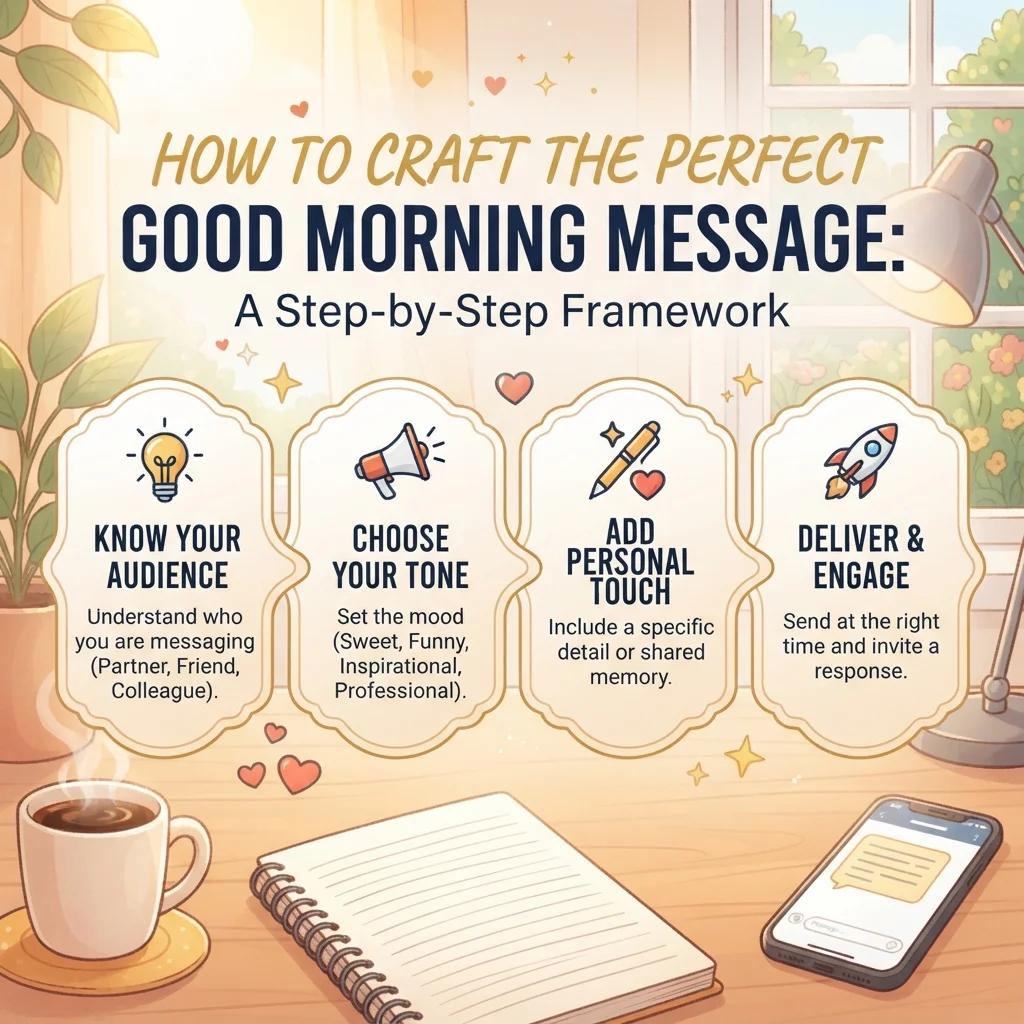
Creating a genuine good morning message is simpler than it might seem. Instead of reaching for a template, use this flexible framework to build messages that feel natural and thoughtful.
Step 1: Start with a Warm Greeting
Begin with a simple acknowledgment of the morning. “Good morning,” “Morning,” or “Hey, hope you slept well” are classic openings for a reason. They’re warm without being demanding. This step establishes the tone and signals that the message is intentional.
Step 2: Add Specificity
This is the most crucial step. Reference something real about their day, a previous conversation, or a shared detail. Instead of “Have a great day,” try “Good luck with that big meeting today” or “Thinking of you as you head into that exam.” Specificity signals that you’re paying attention. It shows that the message is for them, not for an audience.
Specificity can also involve recalling a shared memory. “Morning! Was thinking about our trip to the beach last summer—wish we were there right now” creates a moment of shared nostalgia that deepens connection.
Step 3: Keep It Brief
One to three sentences is usually ideal. A longer message can feel like it requires a lengthy response, while a short message invites engagement gently. This respects the recipient’s time and energy in the morning. Of course, there are exceptions. In long-term relationships, longer messages are perfectly fine. But as a rule, brevity is appreciated.
Step 4: End Openly
End in a way that doesn’t demand a reply. “Excited to hear how your day goes” is better than “Talk soon?” which can create a slight feeling of obligation. Open endings leave the ball in their court without pressure. The goal is to brighten their morning, not to initiate a back-and-forth conversation.
Good Morning Message Examples for Every Situation
Here are categorized examples that demonstrate the principles discussed above. Use these for inspiration, but always adapt them to your specific relationship and context.
Short and Sweet Morning Texts
These are perfect for sending a quick reminder of your care without any pressure.
- “Good morning—just thought of you and wanted you to know it.”
- “Morning. You were on my mind when I woke up.”
- “Good morning to someone who makes mornings better. Have a great day.”
- “Just wanted to let you know I’m grateful for our friendship. Hope it’s a great one.”
- “Good morning. Hope your coffee is good today.”
- “Rise and shine—thinking of you.”
- “Morning! Hope today treats you well.”
- “Sending good vibes your way this morning.”
Heartfelt and Romantic Messages
These are ideal for a partner and express deeper feelings while still respecting their space.
- “Good morning, beautiful. I hope your day is as bright and wonderful as your smile.”
- “You’re the first person I thought of this morning, and that’s how I want every day to start.”
- “Good morning, my love. Waking up with you on my mind makes every day brighter.”
- “Just wanted to remind you that you’re loved, cherished, and thought of this morning.”
- “Every morning, I wake up wanting to be a better person for you.”
- “The best part of my morning is knowing you’re in my life.”
- “Good morning to the woman who makes my world feel complete.”
- “I’m so grateful to wake up knowing you exist in this world.”
- “Morning! You’re my favorite reason to get out of bed.”
Uplifting and Supportive Messages
These messages work well when someone has a challenging day ahead or needs a confidence boost.
- “Good morning. I know today might be hard, and I’m thinking of you.”
- “Sending you calm for today. That thing you’re worried about—you’re going to handle it well.”
- “Morning! Remember you’re doing better than you think you are.”
- “Good morning! You’re doing better than you think you are.”
- “I hope your day is as beautiful and purposeful as your spirit. I’m rooting for you, always.”
- “Whatever comes your way today, you’ve got this.”
- “Morning! Just a reminder that you’re capable of amazing things.”
- “Sending strength and positivity your way for today.”
- “You’ve handled tough days before. Today will be no different.”
Playful and Flirty Good Morning Ideas
These add a fun spark to the morning, especially if you share a sense of humor.
- “Rise and shine! Wishing you a day as amazing as you are.”
- “Good morning! T minus 16 hours until we can go back to bed.”
- “I’d say good morning, but I think we both know I’m not a morning person until the caffeine kicks in.”
- “Wakey wakey, eggs and bakey!”
- “Good morning, gorgeous; I saw you smile, which made me want to start my day.”
- “Morning! Are you a magician? Because whenever I look at you, everyone else disappears.”
- “Good morning! How’s the most beautiful person I know doing?”
- “You know it’s a good morning when I’m thinking about you before my first coffee.”
Messages That Reference Shared Memories
One of the most effective ways to personalize a morning message is to reference a shared memory or inside joke.
- “Good morning! Remember that time we tried to make pancakes and nearly set off the fire alarm? Hope your day has fewer kitchen disasters.”
- “Morning! I was just thinking about our trip to the beach last summer. Wish we were there right now.”
- “Good morning! You still owe me a rematch in that board game we played last weekend.”
- “Rise and shine! I was just thinking about how you laughed so hard you cried at that movie. That sound is my favorite thing.”
- “Morning! Remember when we stayed up until 3 AM talking about nothing? I’d do that again tonight.”
- “Good morning! I was just looking at that photo from our hike last fall. We should do that again soon.”
Messages for Difficult Mornings
Sometimes the person you’re messaging is having a genuinely tough time. These messages acknowledge that while offering comfort.
- “I know mornings are hard for you right now. I’m thinking of you.”
- “Sending you extra warmth today. This morning feels heavy, but you don’t have to carry it alone.”
- “Good morning. I know you’re struggling, and I want you to know I’m here.”
- “Some mornings are just harder than others. Take it slow today.”
- “I wish I could be there to make you coffee and sit with you. Please know I’m thinking of you.”
- “You don’t have to be strong today. Just get through it, and I’ll be proud of you.”
- “Morning. Let today be gentle with you. You deserve that.”
Long-Distance Relationship Messages
For couples separated by distance, morning messages carry extra weight. They bridge the gap and maintain connection.
- “Waking up without you is tough, but knowing I’ll talk to you later makes it better. Good morning.”
- “Morning! What’s one thing you’re looking forward to today? I want to imagine it with you.”
- “Good morning from across the miles. I’m counting down until we’re in the same time zone again.”
- “Morning! Saw a sunrise today that reminded me of one we watched together. Miss you.”
- “Distance doesn’t stop me from thinking of you first thing in the morning. Good morning, my love.”
- “Good morning! I’ve already planned what I’m going to say when we next talk. Hope your day is beautiful.”
Personalization Techniques That Make Your Message Stand Out
The best good morning messages feel like they were written just for the recipient. Here are practical techniques to achieve that level of personalization.
Listen for Details. Pay attention to the small things they mention throughout the day. If they have an appointment, a big project, or a personal milestone, reference it. This shows you’re engaged with their life beyond the surface level.
Know Their Communication Style. Does your recipient prefer short, sweet texts or longer, more expressive ones? Do they use lots of emojis and GIFs, or are they more straightforward? Matching their style makes the message feel more natural.
Vary Your Approach. Sending the exact same message every day makes even the most thoughtful original message feel like a template. Some days be affectionate; other days offer practical support or humor. Variety keeps the practice fresh.
Reference Shared Experiences. Inside jokes, shared memories, and mutual interests are gold. A message that references something only the two of you know creates an immediate sense of connection.
Consider Their Love Language. If they appreciate words of affirmation, lean into expressive language. If they value quality time, reference future plans together. If they appreciate acts of service, mention something practical you’re doing for them. Understanding their love language can guide both the content and tone of your message.
When Not to Send a Good Morning Message
While morning messages are generally a positive practice, there are situations where they might not be appropriate. Recognizing these moments is part of being a thoughtful communicator.
When She’s Asked for Space. If someone has communicated a need for distance, respect that. Continuing to send daily messages can feel intrusive rather than caring.
During Significant Stress. Sometimes people need to focus on themselves without the obligation of responding to messages. If you know they’re going through an intense period, it might be better to check in less frequently.
In Professional Contexts. Unless you have a close personal relationship, sending good morning messages to colleagues or supervisors is generally inappropriate. It blurs professional boundaries.
When the Recipient Has Indicated Discomfort. If you’ve noticed that your messages are consistently met with short, delayed, or unenthusiastic responses, consider whether the practice is welcome. Not everyone appreciates daily check-ins.
When It’s Becoming a Chore for You. The practice should feel natural and genuine. If you’re sending messages out of obligation rather than genuine desire to connect, it might be time to take a break.
Cultural and Regional Considerations

The appropriateness and style of good morning messages can vary across cultures. Understanding these differences can help you calibrate your approach if you’re in a cross-cultural or international relationship.
In many Western cultures, daily morning texts are generally seen as a positive romantic or friendly gesture. In some Asian cultures, they might be interpreted as more serious or committed than intended. Similarly, regional differences within a country can affect norms. Urban dwellers might be more accustomed to constant digital communication, while those from more rural areas might prefer more traditional forms of connection.
Age also plays a role. Younger generations tend to be more comfortable with frequent digital communication, while older generations might prefer phone calls or less frequent check-ins. Paying attention to the recipient’s preferences is the most reliable guide.
Expert Tips for Maintaining the Habit
Sending a good morning message consistently over time requires more than good intentions. Here are practical strategies for making it a sustainable practice.
Set a Reminder. If you’re not naturally a morning person, set a gentle alarm or notification to remind you. This ensures you don’t forget and creates consistency.
Keep It Simple. Not every message needs to be a masterpiece. Some days, a simple “Good morning, thinking of you” is perfectly sufficient. The consistency matters more than the content.
Rotate Types. To avoid becoming repetitive, alternate between different types of messages. Some days send affectionate messages, other days supportive ones, and occasionally playful ones. This variety keeps the practice fresh.
Don’t Stress About Perfection. Sending a good morning message is a practice, not a test. Some days you’ll nail it; other days you’ll send something basic. Both are fine. The goal is consistent presence, not poetic brilliance.
Be Forgiving of Yourself. Life happens. Some mornings you’ll forget or be too busy. This is normal. Simply resume the next day without guilt or over-explanation.
How to Know If Your Messages Are Welcome
It’s natural to wonder whether your good morning messages are appreciated or merely tolerated. Here are signs that indicate the practice is welcome.
Enthusiastic Responses. If they reply with warmth, emojis, or engagement, it’s a good sign. Even a simple “Good morning!” in return is positive.
They Sometimes Initiate. If they occasionally send you a morning message first, it’s a strong indicator that the practice is mutual.
They’ve Mentioned Appreciating It. Many people will directly say “I love your morning texts” or something similar. If they’ve acknowledged the habit positively, keep going.
They Engage with the Content. If you reference something specific and they respond to it, they’re engaged with what you’re sending.
On the other hand, if responses are consistently delayed, brief, or absent, consider whether the practice is welcome. If you’re uncertain, it’s always acceptable to ask directly: “Hey, are my morning texts okay? I want to make sure they’re not too much.” This open communication demonstrates thoughtfulness and respect.
Frequently Asked Questions About Good Morning Messages
1. How do I start a good morning message without being boring?
The key is personalization. Instead of a generic “Good morning,” reference something specific about their day or your relationship. For example: “Good morning! Hope that meeting goes well today” or “Morning! Was just thinking about our walk yesterday.”
2. Is it okay to send a good morning message every day?
In most romantic relationships, yes—daily messages can become a cherished ritual. In friendship, 3-5 times a week is often more appropriate. In early dating, let the pace develop naturally. Always pay attention to how the recipient responds.
3. What should I do if she doesn’t respond to my morning texts?
Don’t follow up immediately. Send one message, and let it stand. If she doesn’t respond, she may be busy, not a morning person, or simply not interested in a back-and-forth conversation at that time. Continue your routine without pressure, or consider checking in about it later.
4. How long should a good morning message be?
Usually 1-3 sentences is ideal. This is enough to convey warmth without demanding a lengthy response. In long-term relationships, longer messages are perfectly fine, but shorter messages are almost always appreciated.
5. Can I send a good morning message with only emojis?
Occasionally, especially if you share an inside joke or a specific “emoji language.” However, for most days, including actual words makes the message feel more intentional and thoughtful.
6. What if I forget to send a good morning message one day?
Don’t worry about it. Simply resume the next day without guilt or over-explanation. A missed day is not a big deal; consistency over time is what matters.
7. Is it better to send a text or a voice note?
Both have their place. Texts are quick and easy to receive. Voice notes allow the recipient to hear your tone, which can be more emotionally expressive. Consider alternating based on your mood and their preferences.
8. Should I include compliments in every good morning message?
No. While compliments are nice, overemphasizing appearance or constant praise can feel excessive. Balance compliments with messages that show you care about their day, their thoughts, and their experiences.
9. What are good morning messages for long-distance relationships?
Try messages like “Waking up without you is tough, but knowing I’ll talk to you later makes it better” or “Morning! What’s one thing you’re looking forward to today?” You can also send photos of your morning routine to feel more connected.
10. What if English isn’t their first language?
Consider sending the message in their native language—it shows extra effort and thoughtfulness. Even a simple “Good morning” in their language can be a lovely touch. Just ensure you’re using accurate translations.
Conclusion: The Power of Morning Connection
Sending a good morning message is one of the simplest yet most powerful habits you can develop. It requires almost no time, costs nothing, and has the potential to significantly strengthen your relationships. The practice isn’t about finding the perfect words or impressing someone with poetic brilliance. It’s about showing up consistently and reminding someone that they matter to you.
The most effective morning messages are those that feel genuine, specific, and true to your relationship. They don’t need to be elaborate. A simple, personalized acknowledgment that you’re thinking of them is often all it takes to brighten someone’s entire day.
Over time, this small practice can become a meaningful ritual. It builds trust, deepens emotional intimacy, and creates a positive emotional anchor for both of you. In a world full of stress and distraction, a consistent morning message is a reliable moment of warmth. So start tomorrow. Keep it simple, keep it real, and watch how this tiny habit transforms your connection, one morning at a time.

Amelia Brooks is a passionate writer specializing in text meanings, slang, and digital communication trends. She simplifies modern messaging to help readers understand every text with ease.