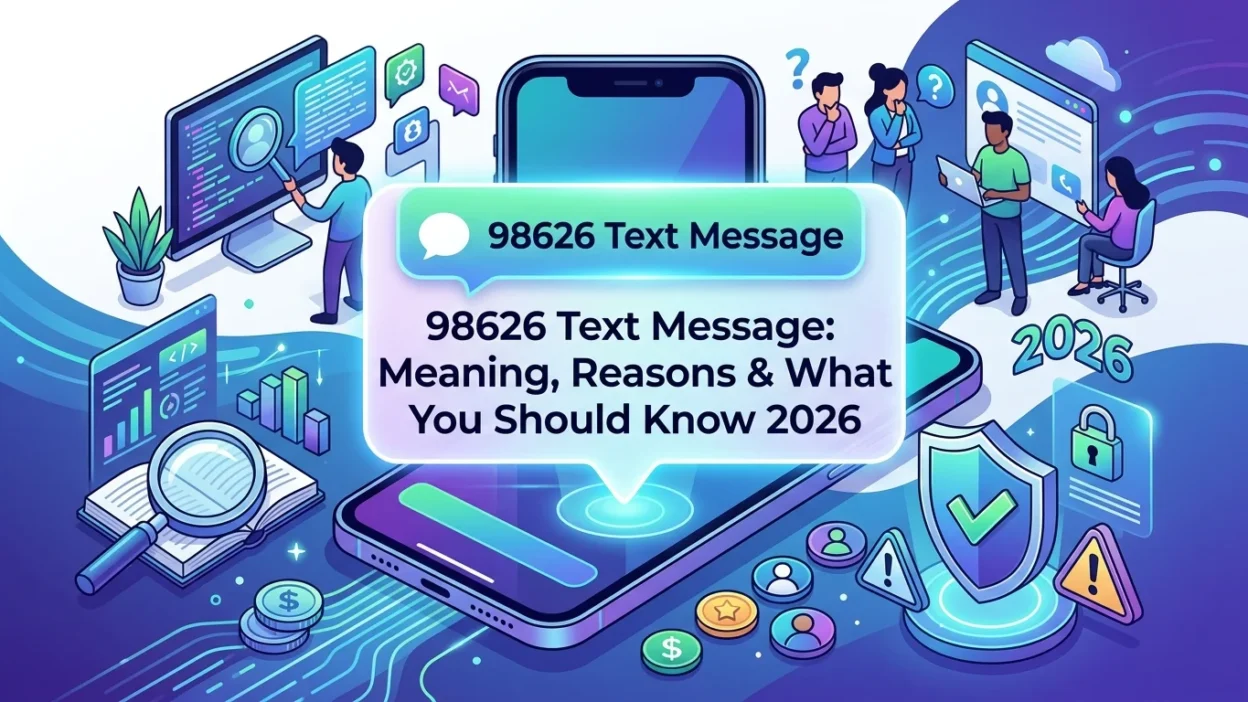
Have you recently noticed a 98626 text message on your phone bill or usage log? Perhaps you saw a mysterious “incoming text from 98626” listed multiple times, but when you checked your phone, there was no actual message to read. This confusion is understandable, as the number 98626 doesn’t appear to be a typical phone number or short code.
A 98626 text message is a legitimate system code used by T-Mobile for internal network functions. Unlike regular texts from friends or businesses, this is a behind-the-scenes communication that records specific events on your account. This guide explains everything you need to know about the 98626 short code, why it appears on your bill, and how to handle it safely.
📌 What Does the 98626 Short Code Represent?
The 98626 short code is classified as a carrier-specific system code. Unlike typical 5- or 6-digit short codes that businesses use for marketing or verification, this 5-digit code is an internal logging mechanism. T-Mobile uses it to record specific background network activities and communications.
When you see a 98626 text message on your usage log, the system is simply documenting that a system event occurred. This is not a message that someone sent to you, nor is it something you can read in your messaging app. Instead, it functions as a technical marker showing that your phone communicated with T-Mobile’s network infrastructure.
According to phone number databases, the 98626 area code is associated with T-Mobile USA Inc, particularly in the Kelso, Washington area. This confirms that 98626 is indeed a legitimate code within T-Mobile’s network ecosystem.
📞 Voicemail Notifications

One of the most common reasons for the 98626 text message log entry is voicemail activity. When someone leaves a voicemail on your line, the network needs to send a notification signal to your phone. This internal network notification is often logged by T-Mobile as an incoming message from 98626.
Similarly, when you call your voicemail box to retrieve messages, this action can also trigger the system to log an entry from 98626 in your usage history. The code essentially serves as a timestamp showing that your voicemail system communicated with the network.
T-Mobile has confirmed that system codes like these are used by the voicemail system to deliver and confirm delivery of important data. They show on the bill as a stamp indicating that a voicemail event occurred. This explanation clarifies why the entries appear without corresponding messages on your phone.
⌚ Device Synchronization
The second frequent trigger for the 98626 short code relates to multi-device plans, particularly those involving connected devices like smartwatches or tablets. If your phone number is linked to a separate device like an Apple Watch, tablet, or hotspot, the network sends internal synchronization signals.
These signals keep your primary and secondary devices in communication. These background status checks are often recorded as incoming 98626 text message entries. This explains why users with data-only or tablet lines often see entries from 98626, even when they haven’t received a physical text message.
When your phone syncs with T-Mobile’s network to maintain service continuity across your devices, the system records this activity through the 98626 code. This ensures that your voicemail, calls, and messaging services remain synchronized across all your connected devices.
🔧 T-Mobile System Alerts
Historically, the 98626 short code has also been used to deliver legitimate system alerts from T-Mobile itself. These can include:
- Visual Voicemail Updates: T-Mobile has used 98626 in the past to alert customers about updates to the Visual Voicemail app.
- Account Notifications: It can serve as a general placeholder for internal account-related notifications.
- Network Status Alerts: The code may record network status checks and connectivity confirmations.
These alerts are system-generated and not something you need to respond to manually. They simply indicate that your phone is communicating properly with T-Mobile’s network.
🔒 Is the 98626 Text Message a Scam?
No. The 98626 short code is a legitimate, internal T-Mobile network identifier and is not associated with scams or spam. Because the code is a specific 5-digit identifier, carriers use it exclusively for network functions. Unlike spoofed numbers or other dedicated short codes, the 98626 short code is considered safe.
However, it is important to remain vigilant about other scam attempts. While the 98626 text message itself is legitimate, scammers frequently target T-Mobile customers through sophisticated smishing attacks that use different numbers.
⚠️ How to Recognize T-Mobile Scam Texts
While the 98626 short code is safe, you should be cautious of any message that contains these red flags:
- Suspicious Links: The message asks you to click a link to update a PIN, claim a gift, or pay a bill, but the link address looks slightly off or misspelled.
- Urgent Money Requests: The message creates a false sense of urgency or threatens to suspend your service unless you take immediate action and provide payment details.
- Requests for Personal Data: The text asks for sensitive information like your password, Social Security number, or full credit card number.
T-Mobile will never ask for this information via text. If you receive a suspicious message, do not click any links or respond. Instead, contact T-Mobile’s official customer service by dialing 611 from your T-Mobile phone.
❌ Common Mistakes About 98626 Text Messages
Many people misunderstand the nature of the 98626 short code, leading to unnecessary concern or confusion.
Mistake 1: Assuming It’s a Spam Message
Some users see a 98626 entry on their bill and assume it is spam. However, this is simply a system record of network activity. There is no actual message to read or respond to.
Mistake 2: Trying to Reply to 98626
Because 98626 is a system utility address, it does not accept replies. Sending a message to this number will not reach anyone and will not resolve anything.
Mistake 3: Blocking the 98626 Short Code
Blocking the 98626 short code is strongly discouraged, as it could interfere with your voicemail service and device synchronization features. The code is essential for your phone to function properly.
📋 What If Your Bill Shows 98626 Text Messages?
If you see entries for 98626 text messages on your T-Mobile bill, this is perfectly normal. Here is what you should understand:
- No Action Required: These entries do not indicate a problem with your account. They are simply records of system events.
- No Charges Applied: System-level messages do not incur additional charges. They are part of normal network operations.
- Not a Scam Indicator: The presence of these entries does not mean your phone is compromised.
The 98626 code appears on your bill because the system needs to document that a communication occurred between your device and the network. This is standard practice for all major carriers.
📱 Other Meanings of 98626
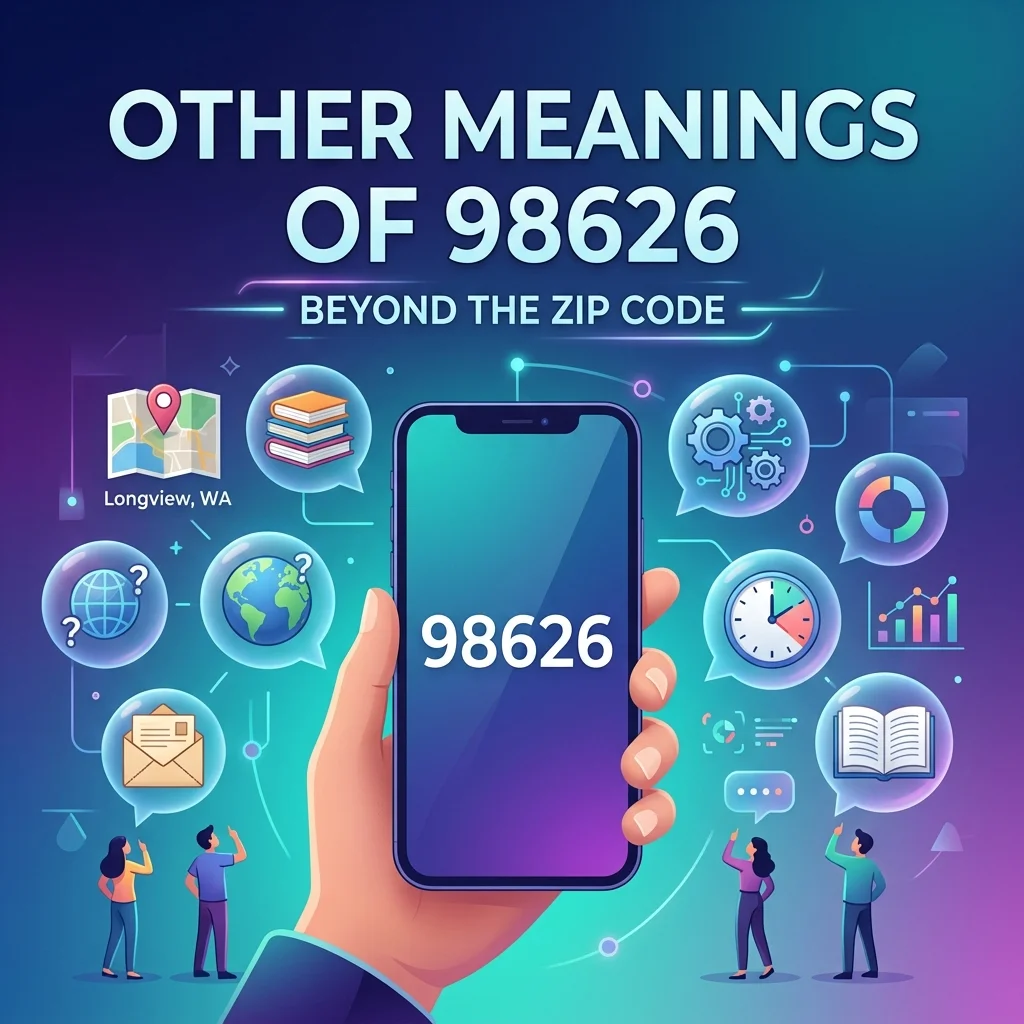
Beyond its role as a T-Mobile system code, the number 98626 has other meanings that are unrelated to text messaging.
Geographic Area (98626 ZIP Code)
The number 98626 is actually a ZIP code in the United States. It represents Kelso, Washington, a city in Cowlitz County. Phone numbers with the 253 and 360 area codes are associated with this ZIP code and served by T-Mobile USA Inc.
Some databases show that phone numbers carrying the 98626 ZIP code belong to T-Mobile customers. For example, a phone number with area code 253-330-XXXX listed as belonging to a T-Mobile customer in Kelso, WA with ZIP code 98626.
Stock Market and Financial Context
T-Mobile US Inc is publicly traded on the NASDAQ under the ticker symbol TMUS. Financial reports and market data often reference the company’s stock performance. However, this is completely unrelated to the 98626 short code used for text messaging.
🔍 Frequently Asked Questions
What does 98626 mean on my T-Mobile bill?
When 98626 appears on your bill under the phone number column, it indicates a record of system-level communication. This is most commonly related to voicemail notifications or device synchronization.
Is 98626 a legitimate T-Mobile code?
Yes, T-Mobile uses 98626 as an internal system code for network functions. It is used by the voicemail system and for device synchronization across connected devices.
Can I text STOP to 98626?
No, you cannot use STOP commands with the 98626 short code. Unlike marketing short codes, 98626 is a system utility address. Commands like STOP or HELP will not work.
Am I charged for texts from 98626?
You are not charged for system-level messages from 98626. Carriers do not bill customers for automated configuration texts required for their services to function.
Why do I see an incoming text from 98626 in my log?
Your phone records this entry automatically when certain events occur, such as receiving a voicemail, checking voicemail, or syncing with another device.
Can I block the 98626 short code?
Blocking 98626 is strongly discouraged, as it could interfere with your phone’s voicemail service and device synchronization features.
What if I receive spam that appears to be from 98626?
The 98626 short code itself does not send spam. However, scammers can spoof other numbers. If you receive suspicious messages from any number, do not click links and report them by forwarding to 7726 (SPAM).
Does 98626 have any other meanings?
Yes, 98626 is also a ZIP code for Kelso, Washington. It appears as a location identifier in phone number directories associated with T-Mobile customers in that area.
Is 98626 related to T-Mobile financial data?
No. While T-Mobile US Inc is a publicly traded company, the 98626 short code is unrelated to stock market tickers or financial reporting.
✅ Conclusion
The 98626 text message is a legitimate, internal system code that T-Mobile uses for important network functions. It primarily serves two purposes: logging voicemail notifications and managing device synchronization. While the code itself is safe and not a scam, it appears on your bill because the system records these background activities for tracking purposes.
Understanding what the 98626 code represents will help you interpret your phone usage logs correctly. It is not something to fear, block, or respond to. However, always remain cautious about other suspicious messages that may arrive from different numbers. When in doubt, contact T-Mobile directly through official channels. Your phone uses the 98626 code to keep your voicemail and other services working properly, so you can confidently ignore these entries on your bill.

Amelia Brooks is a passionate writer specializing in text meanings, slang, and digital communication trends. She simplifies modern messaging to help readers understand every text with ease.